Basic Specifications
After-sales Service
Installation and Remote
Cell Type
Perc Topcon Hjt IBC Hbc Sunpower
Laser Scribing
Non Destructive Cutting
Testing
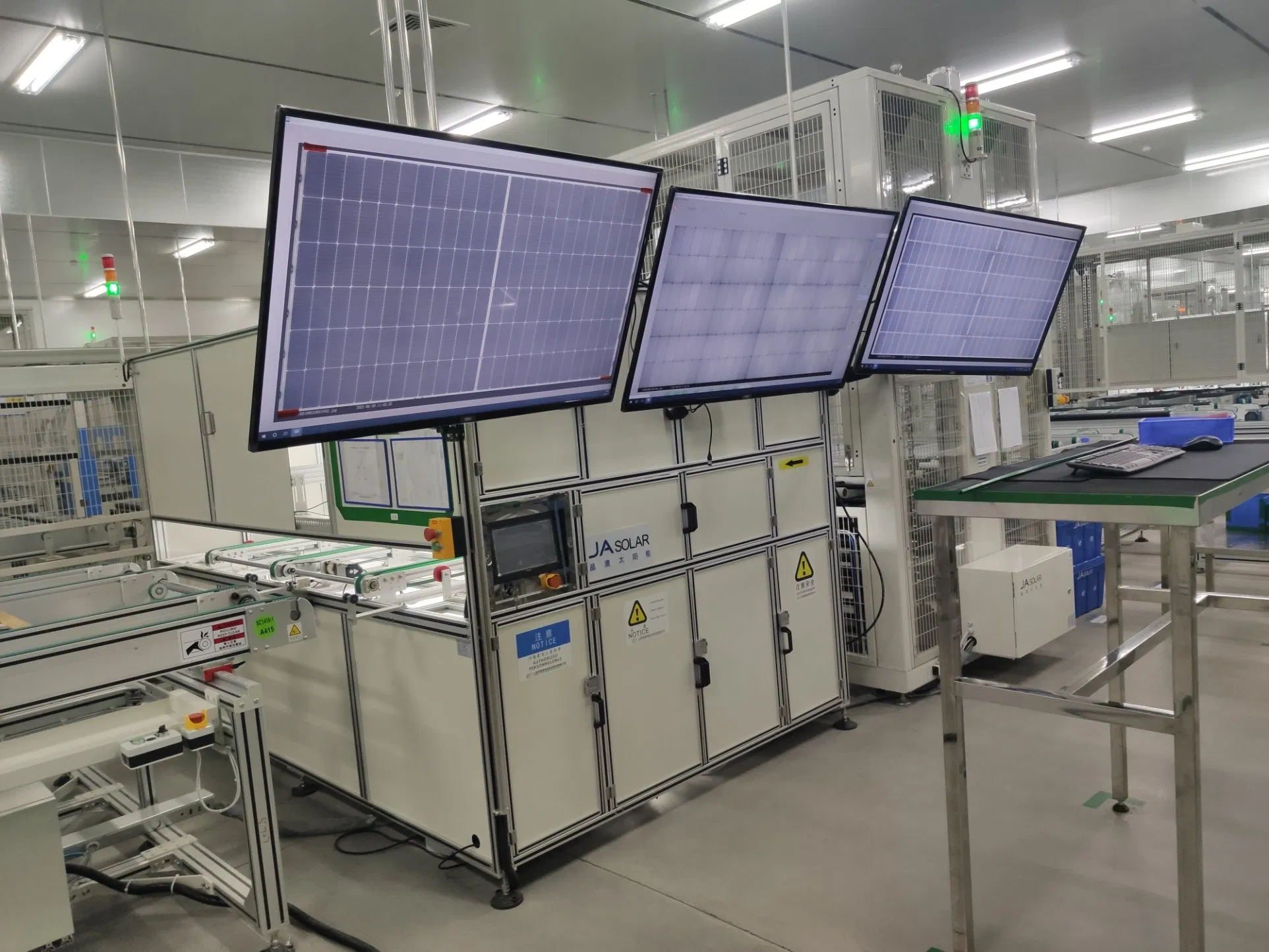
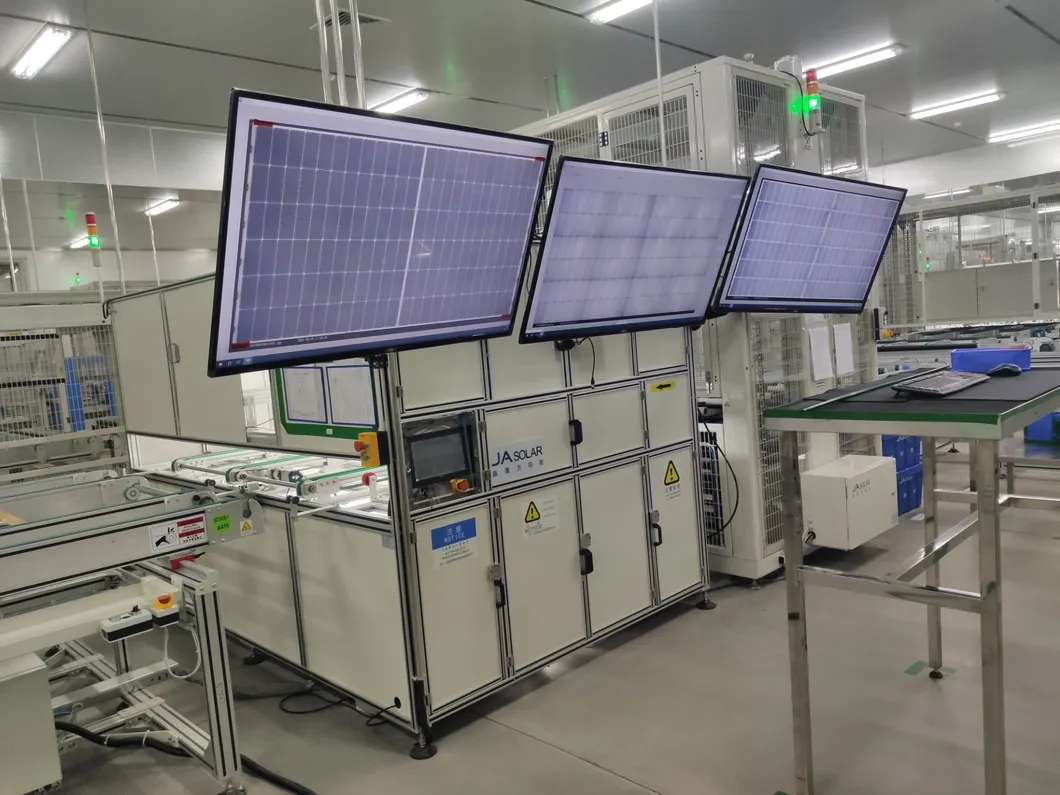
On Line EL and IV Tester
Professional Solar Panel Production Solution
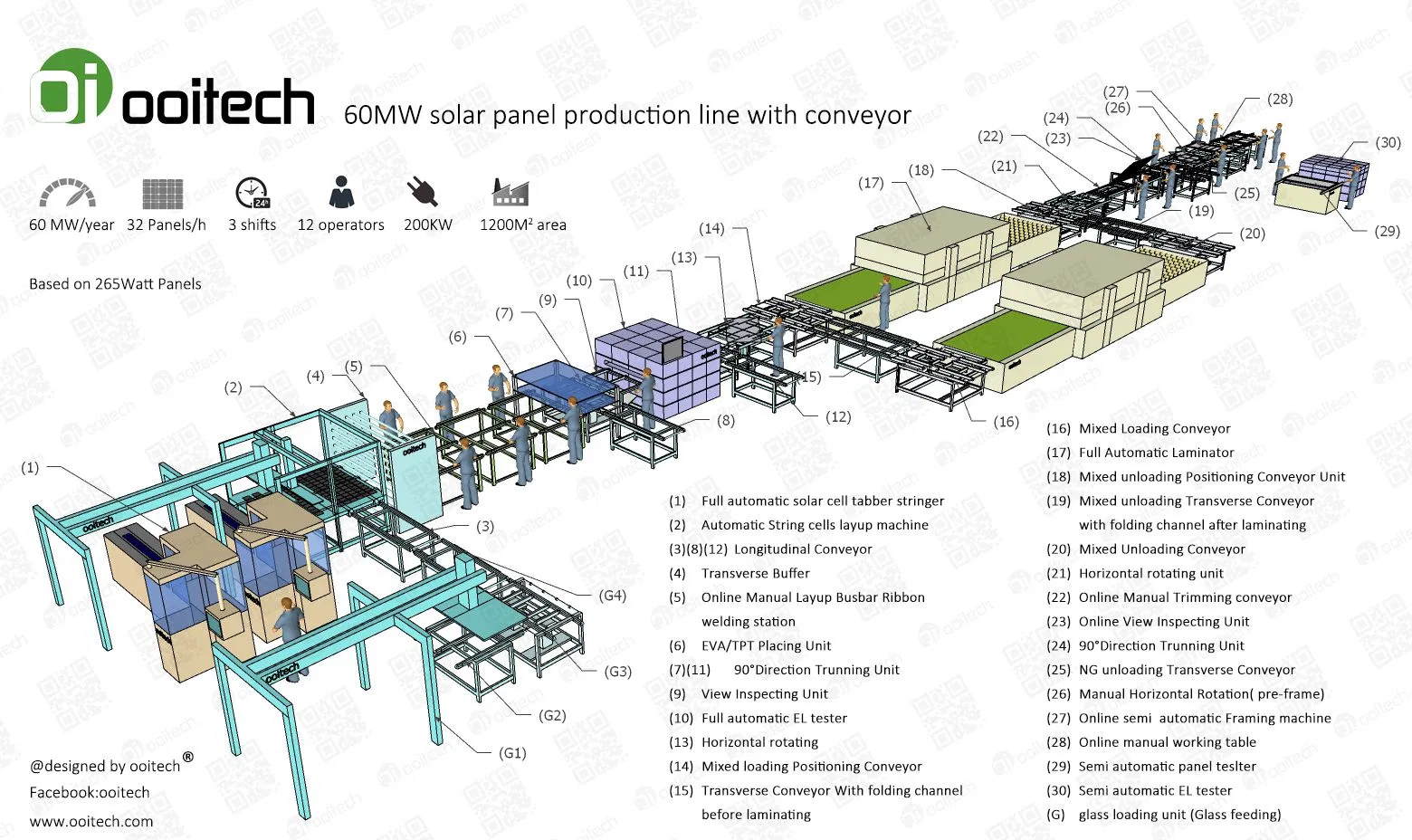
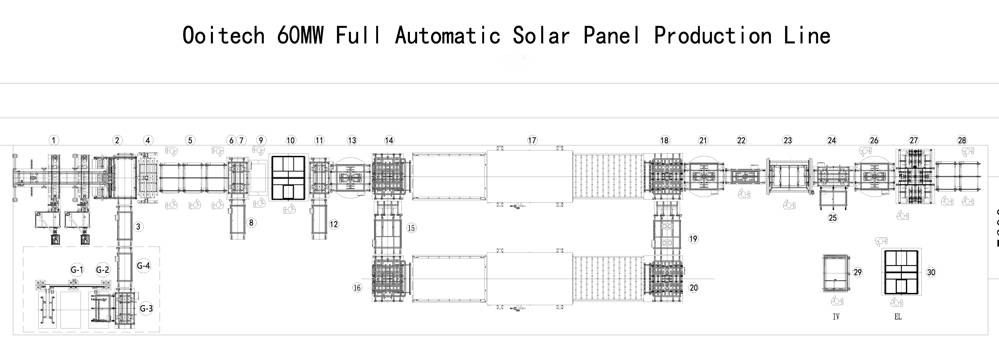
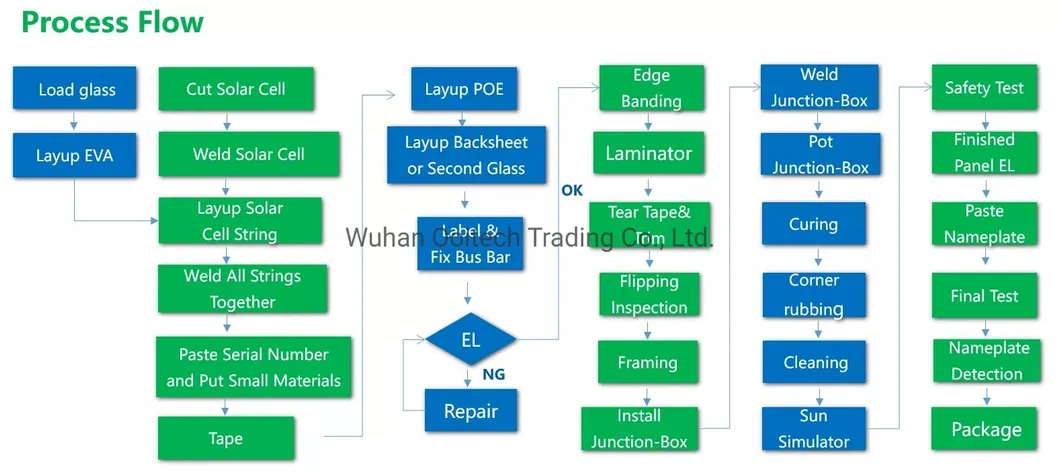
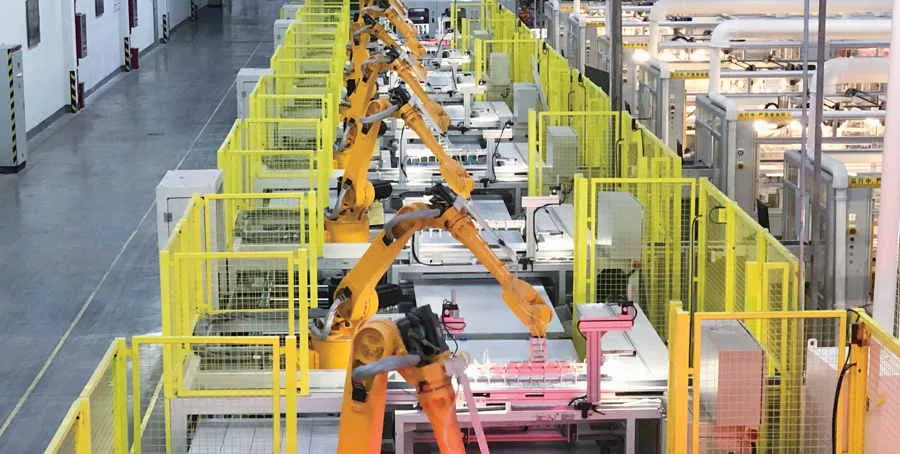
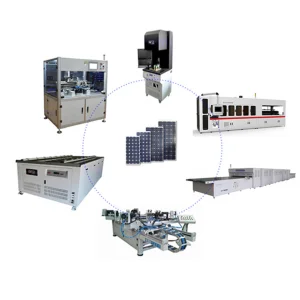
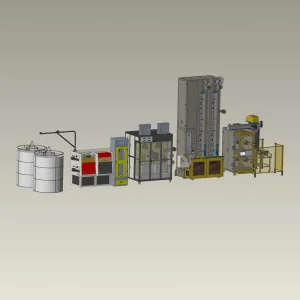
Solar panel production line is a crucial manufacturing process utilized to create solar panels, which serve as vital components in solar energy systems. This production line comprises a variety of specialized machines and equipment, each designed to perform specific tasks in the production process. Key machines used in a solar panel production line include tabber and stringer machines, laminators, testers, framing machines, and interconnection equipment. The production line is meticulously designed to ensure consistent quality, high yields, and operational efficiency of solar panels.
1
Test solar cell efficiency
2
Cut complete solar cell into small pieces
3
Welding solar cell to string
4
Cutting EVA/TPT material
5
Automatic Lay up process
6
Visual inspection of raw materials
11
Framing machine installation
13
Junction box installation
14
IV Electrical performance test
15
Voltage insulation testing
18
Surface cleaning and package
Main Manufacturing Equipment
| Step | Device Name | Working Content |
|---|
| 1 | Solar Cell Tester | Test solar cell efficiency for consistency. |
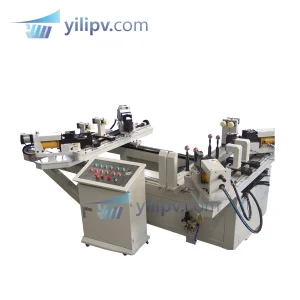
| 2 | Laser Scribing Machine | Non-destructive cutting for cells from 3w-140w. |
| 3 | Auto Tabber Stringer | Automatic welding of solar cell strings. |
| 4 | Automatic Layup | Automatic layup of string cells. |
| 8 | EL Defect Tester | Identify micro-cracks and invisible defects. |
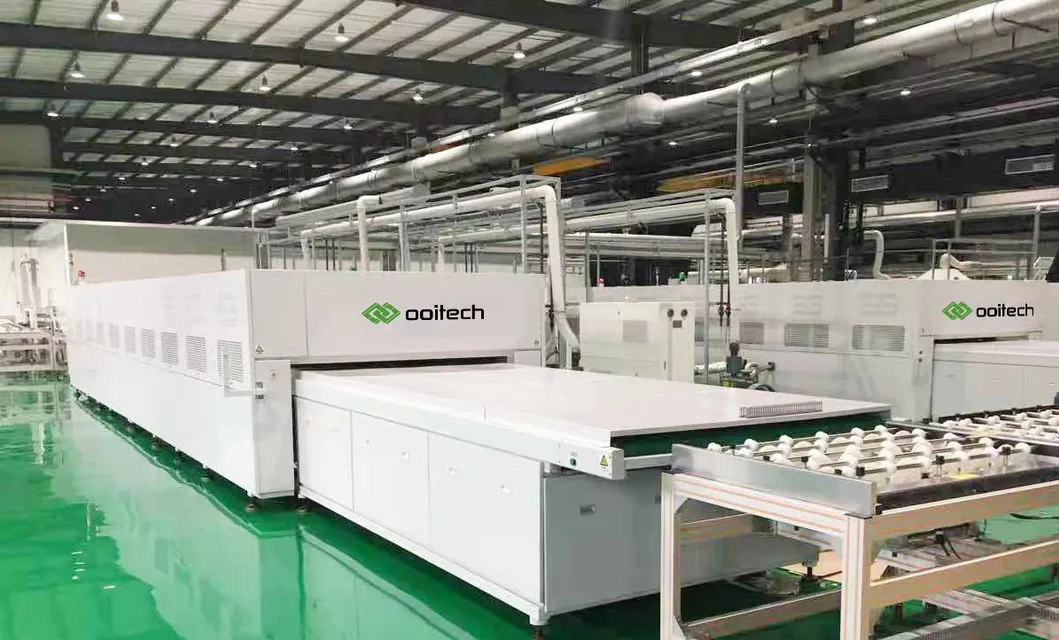
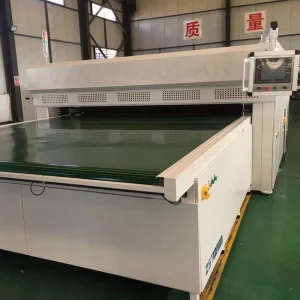
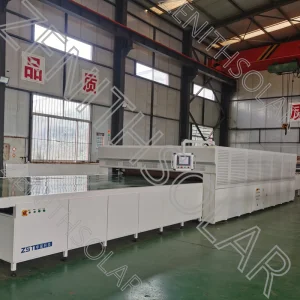
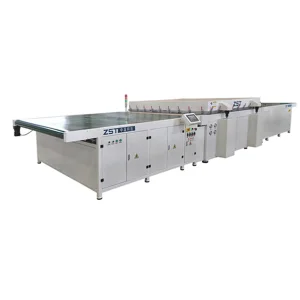
| 9 | Solar Laminator | Laminate raw materials into solar panels. |
| 14 | Solar Simulator | IV Test for electrical performance (Power, Current). |
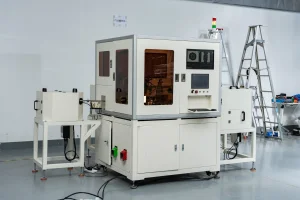
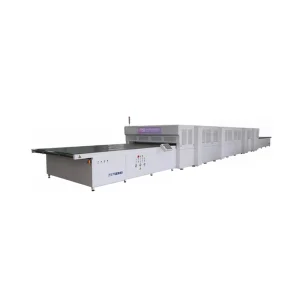
⚡ Non-Destructive Cutting (NDC) Machine
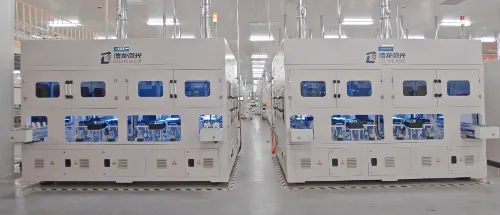
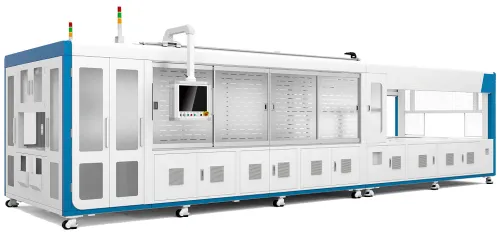
The Non-Destructive Cutting (NDC) Machine is a type of thermal laser separation cutting machine. It uses a laser to cut solar cells without causing damage, allowing for more accurate and efficient manufacturing.
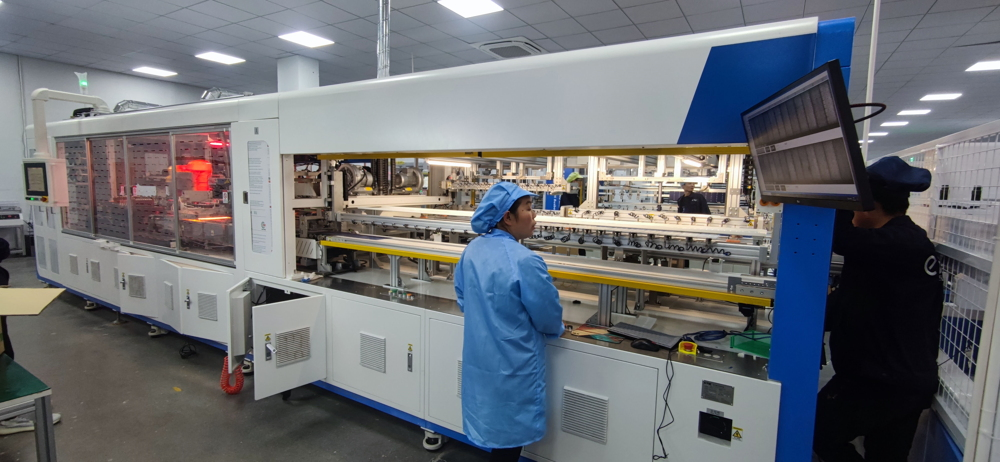
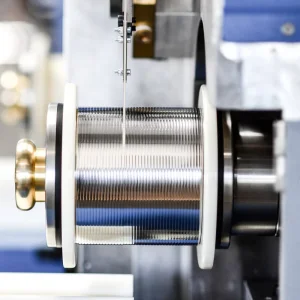
⚡ Tabber Stringer & Bussing
Designed to connect solar cells together by soldering thin metal ribbons (tabbing). This ensures electrical continuity and is essential for high-performance module formation.
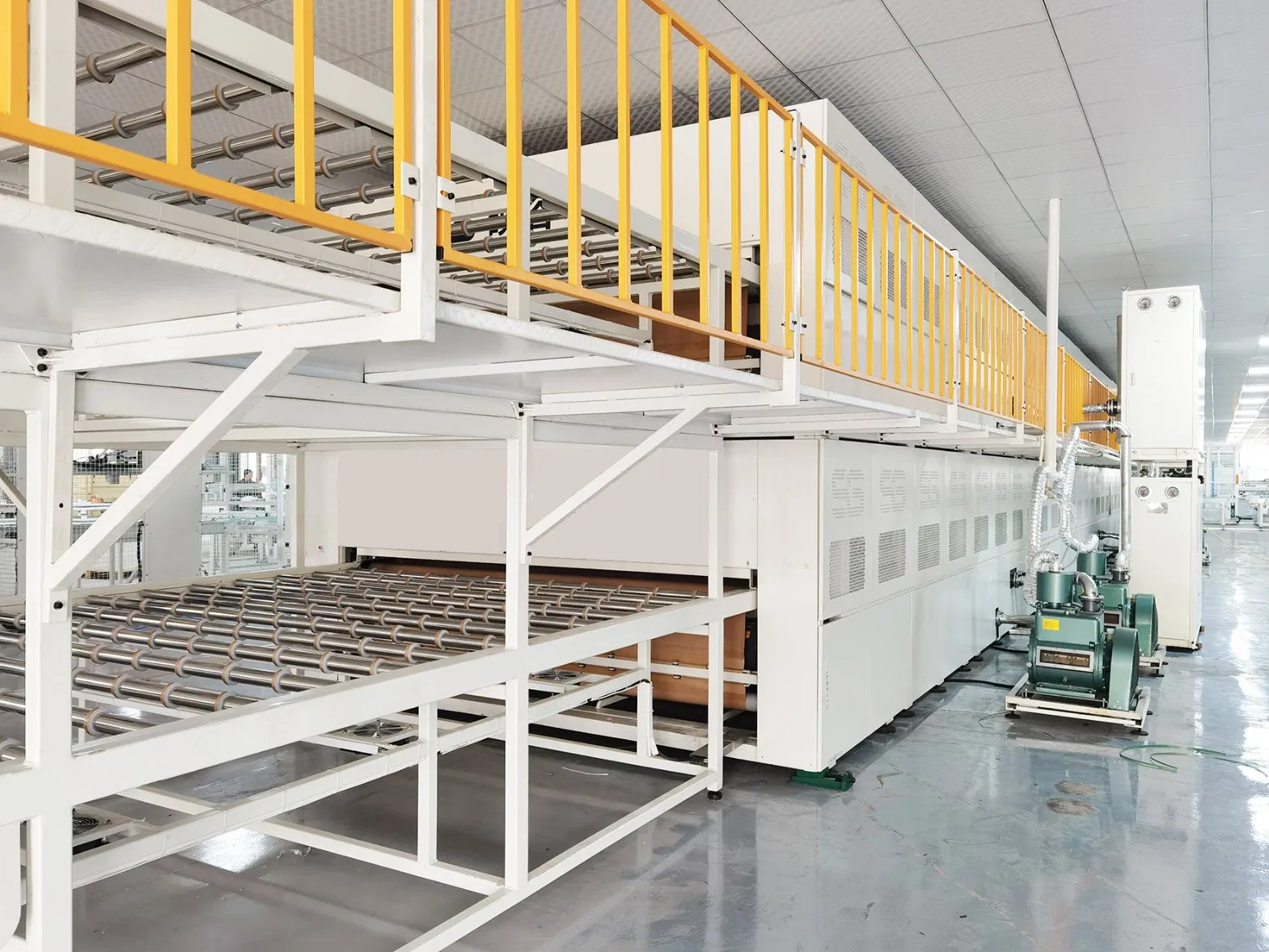
⚡ Lamination & Inspection
The fully automatic laminating machine uses heat and pressure to fuse glass, EVA film, and cells. Subsequent EL testing identifies breakage, black spots, and process defects.
Global Presence
| Region | Market Focus |
|---|
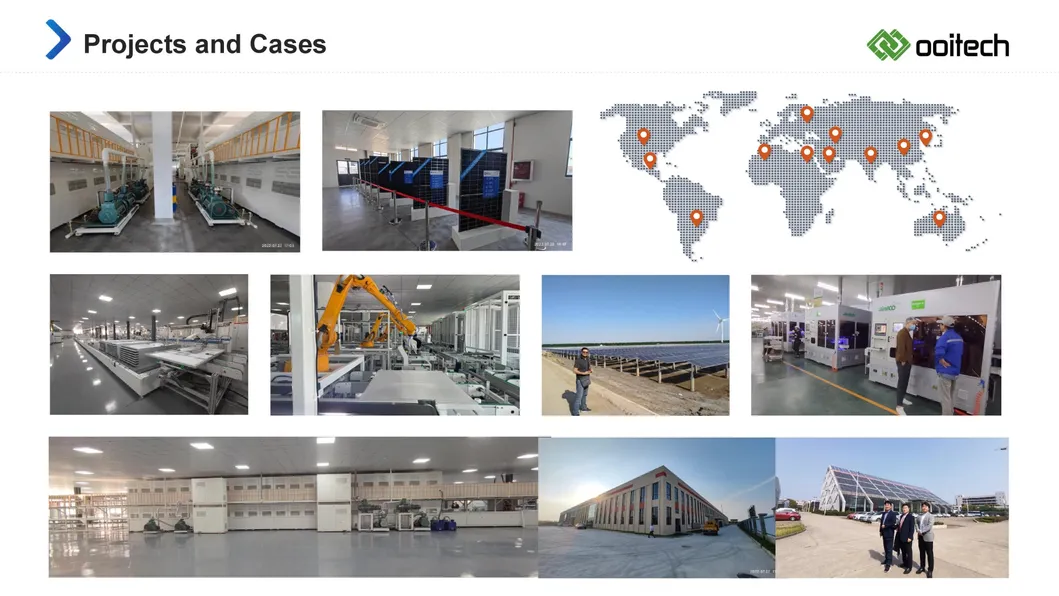
| India | Pune, Vadodara, Kanpur, Hyderabad, Surat |
| Egypt | Cairo, Suez |
| Others | Russia, Mexico, Germany, USA, Tunisia, Argentina, Bahrain, Zimbabwe, Saudi Arabia |
Frequently Asked Questions
Q1: What is the annual production capacity of this line?
The production line is customizable with a capacity ranging from 100MW to 600MW per year.
Q2: What types of solar cells can be processed?
It supports various cell types including PERC, Topcon, HJT, IBC, HBC, and Sunpower, with sizes from 156mm to 230mm.
Q3: Does the line support advanced module technologies?
Yes, it is fully compatible with double glass modules, half-cut cells (1/2, 1/3, 1/4), and non-destructive cutting technology.
Q4: How is quality controlled during the production process?
Quality is ensured via online EL testers and IV simulators that identify micro-cracks and measure electrical performance at multiple stages.
Q5: What certifications do the machines hold?
All primary equipment in the production line is CE and ISO certified to meet international safety and quality standards.
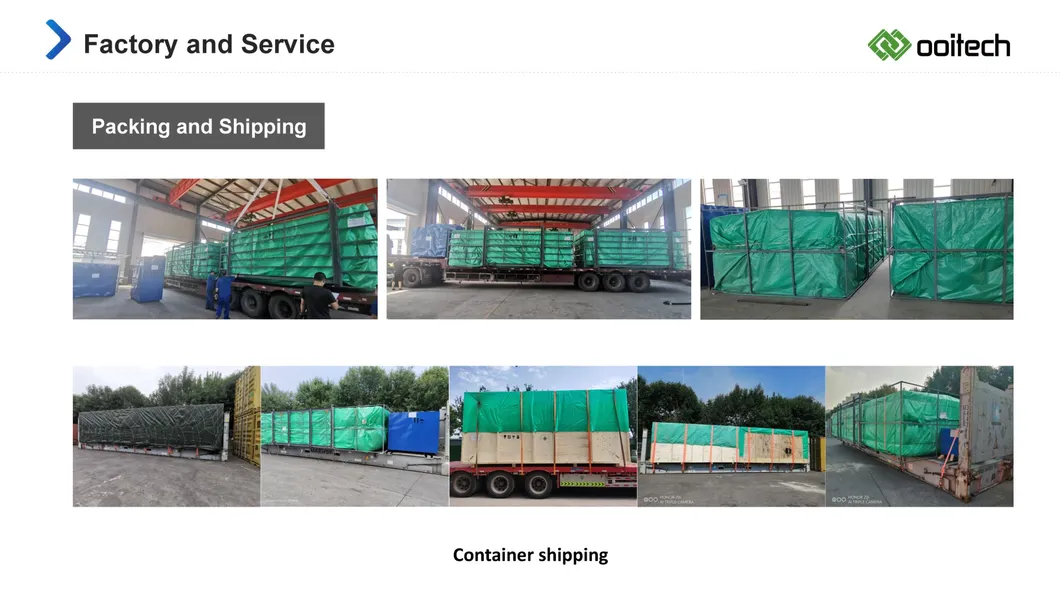
Q6: Is installation support provided?
Yes, we provide customer site installation and remote after-sales technical support for all manufacturing equipment.
 GeoSyn Solar