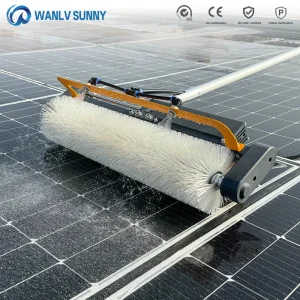
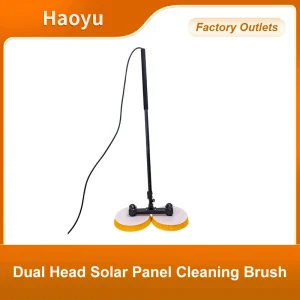
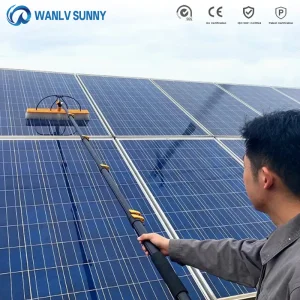
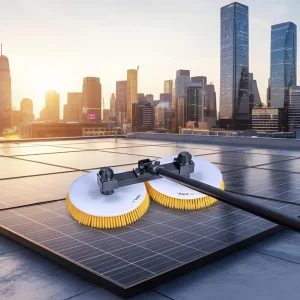
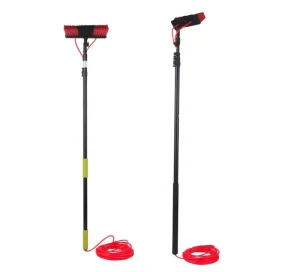
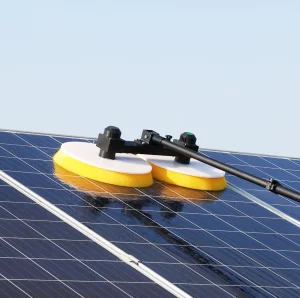
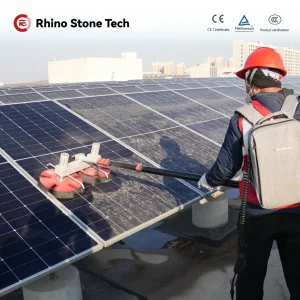
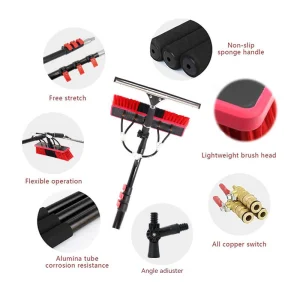
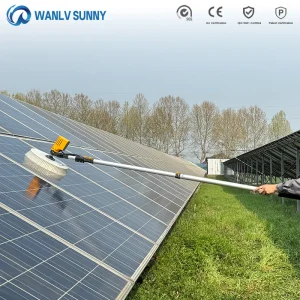
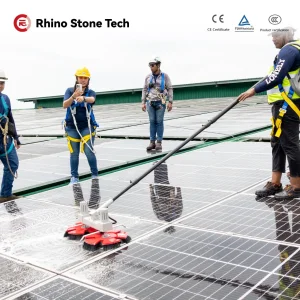
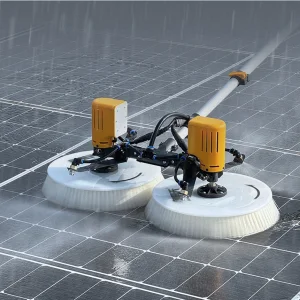
Core systems engineered for tropical coastal soiling, high humidity and rooftop or ground-mounted PV arrays around Mulifanua.
Mulifanua sits on the northwestern coast of Upolu in Samoa, anchored by the Mulifanua Wharf — the country's principal ferry gateway between Upolu and Savai'i. The combination of coastal salt aerosol, equatorial humidity, volcanic dust and heavy seasonal rainfall creates one of the more aggressive soiling environments for photovoltaic operators in the Pacific.
Maintenance equipment for Mulifanua operators follows a clear maturity curve. The roadmap below reflects how suppliers and manufacturers are sequencing capability for island markets.
| Phase | Technology Route | Field Deployment Fit | Maturity |
|---|---|---|---|
| Phase 1 | Water-fed telescopic pole brushes, handheld systems | Small rooftops, low-volume sites, tight access | Mature |
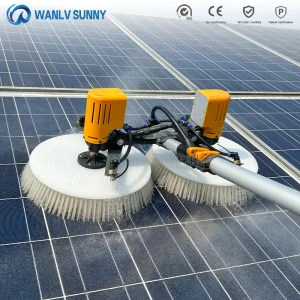
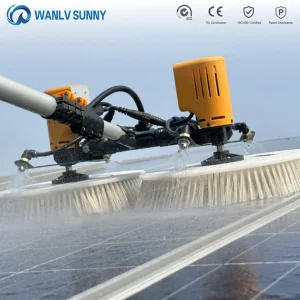
| Phase 2 | Battery-powered single/dual-head rotating brushes with extension rods | Commercial rooftops, ground mounts, water-scarce sites | Mature |
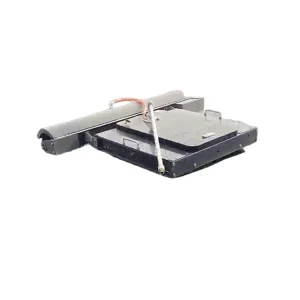
| Phase 3 | Semi-automatic double-head disc machines with brushless motors | Utility-scale arrays, carport and warehouse roofs | Scaling |
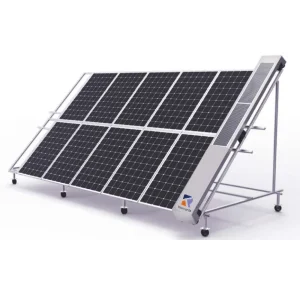
| Phase 4 | Automated robot crawlers with scheduling and telemetry | Large ground-mounted farms, repetitive cleaning cycles | Emerging |
| Phase 5 | IoT-linked O&M platforms tying soiling sensors to cleaning dispatch | Multi-site portfolios, port and microgrid operators | Early |
A credible cleaning programme is a system, not a tool. For Mulifanua, the macro solution stack combines hardware, water strategy, scheduling intelligence and workforce enablement.
Serving Mulifanua means engineering for island logistics, salt corrosion and regulatory expectations. Suppliers that ignore localisation erode trust quickly.
Detergent-free, water-efficient cleaning aligned with Samoa's marine and freshwater protection expectations. Runoff management near the wharf and reef corridor.
Low-voltage battery systems, IP-rated components, insulated extension poles and rooftop fall-protection guidance for tropical outdoor work.
Consolidated sea freight to Apia and Mulifanua wharf, corrosion-resistant packaging, and spare brush/motor kits to cut downtime.
Mulifanua buyers benefit from a manufacturing base that has moved beyond bulk production into digital-twin engineering, automated motor assembly, in-line QC and modular design — the hallmarks of Factory 4.0.
Multinational EPCs, IPPs and O&M providers sourcing for Pacific island projects apply consistent procurement gates. Suppliers serving Mulifanua must clear every one of them.
Test reports, IEC-referenced safety evidence, material declarations and warranty terms in English.
OEM branding, pole length variants (3.6 m / 5.4 m / 7.5 m), voltage and plug standards for island grids.
Battery cycle life, brush wear rates and spares availability modelled over a 5-year horizon.
Regional training, remote diagnostics and RMA pathways suited to Pacific shipping constraints.
Water-saving designs, recyclable packaging and responsible battery sourcing documentation.
Freight quotes to Apia, FCL/LCL options and contingency plans for cyclone-season windows.
Suzhou GeoSyn Solar Co., Ltd. is a leading innovator in the solar energy sector, specializing in smart solar power systems for both residential and commercial applications. Headquartered in Suzhou, China, the company has earned a strong reputation for delivering high-performance, reliable, and sustainable solar solutions under its flagship brand, ApexSolar. By combining advanced technology with intelligent energy management, Suzhou GeoSyn Solar aims to meet the growing global demand for clean and efficient energy solutions.
The company's product portfolio includes residential rooftop solar systems, commercial-scale solar installations, energy storage solutions, and advanced solar monitoring platforms. Each system is designed to optimize energy generation, reduce electricity costs, and provide reliable power even in off-grid or hybrid configurations. With a focus on smart inverters, battery integration, and IoT-enabled monitoring, Suzhou GeoSyn Solar ensures that its solutions offer seamless performance, real-time diagnostics, and user-friendly operation.
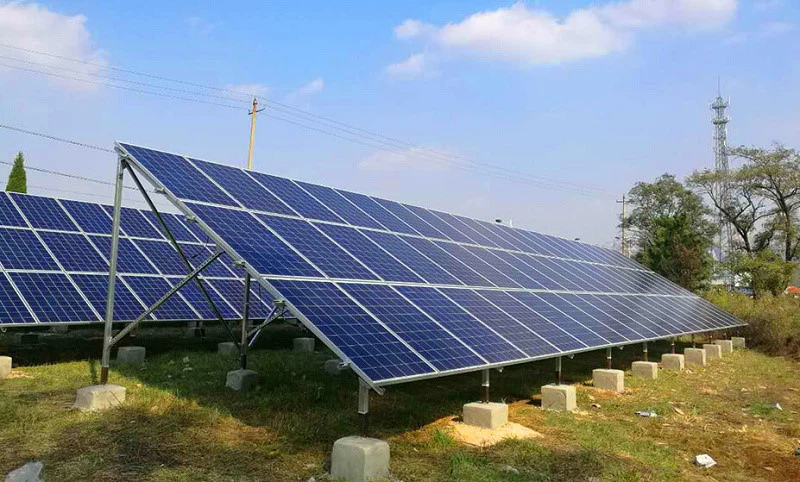
In addition to product innovation, the company emphasizes sustainability, quality control, and rigorous research and development. Suzhou GeoSyn Solar collaborates closely with architects, engineers, and municipalities to deliver tailored solutions that address unique site requirements and maximize energy efficiency.
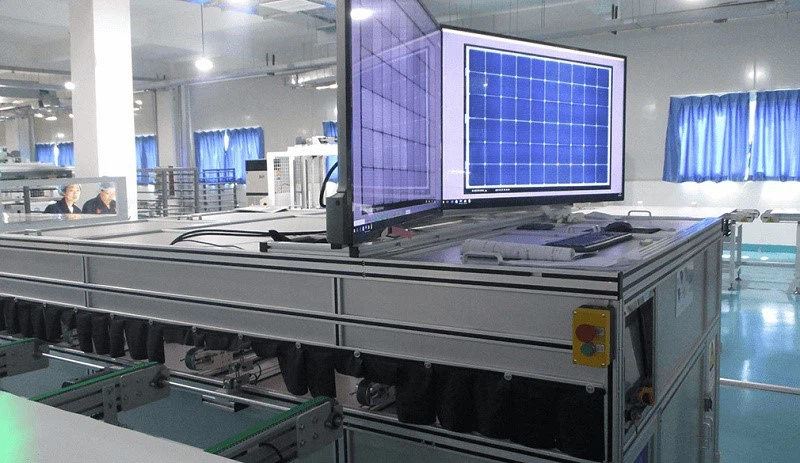
Committed to advancing renewable energy adoption worldwide, Suzhou GeoSyn Solar Co., Ltd. continues to expand its global footprint, offering innovative, intelligent, and eco-friendly solar power systems that empower communities, businesses, and homes to achieve energy independence while reducing environmental impact.
Coastal tropical soiling usually warrants 4–8 cleaning cycles per year. Arrays near the wharf or shoreline may require more frequent dry-brush passes, while inland rooftops can follow a lighter schedule verified by yield monitoring.
Where water is limited, battery-powered dry rotating brushes and low-water misting systems are preferred. Water-fed telescopic poles remain appropriate for cemented salt or bird-dropping contamination, ideally using harvested rainwater.
Yes. Suppliers offering OEM flexibility configure chargers and power supplies to island grid characteristics, and battery-powered units operate independently of the grid during cleaning.
Single-head brushes suit narrow rooftops and detail work; dual-head and double-disc machines cover more surface per pass on larger ground-mounted or utility arrays, improving productivity for O&M contractors.
Request torque and battery-cycle test reports, water-seal certificates, references from comparable island or coastal projects, and a clearly defined spares and RMA pathway.
For large ground-mounted farms with repetitive cleaning needs, crawler robots reduce labour dependency. For rooftops and dispersed assets, battery-powered pole systems remain the pragmatic entry point.
A full fleet of solar panel maintenance and cleaning systems — from handheld units to semi-automatic photovoltaic cleaners.
As Samoa continues to displace imported diesel with distributed renewables, the O&M layer becomes strategically important. The next five years are likely to see soiling-sensor-driven cleaning schedules, modular robotic fleets scaled to island logistics, and performance-based service contracts tied to measured yield recovery rather than calendar intervals.
Soiling ratio analytics will shift maintenance from fixed intervals to condition-based dispatch, protecting cash flow for island operators.
Robotics will be adopted where array geometry and labour economics justify it, with pole systems remaining the workhorse for rooftops.
Factory 4.0 suppliers will compete on spares availability and lead-time certainty — the true bottleneck for Pacific projects.
 GeoSyn Solar