Top Reasons Why Solar Panels Perform Differently in Winter

Time:2026-10-13 Author:Oliver
0%

Why solar panels perform differently in winter is not answered by temperature alone. A clear, cold day can improve photovoltaic efficiency, while shorter daylight reduces total energy production. The Fraunhofer Institute’s Photovoltaics Report explains that crystalline silicon modules commonly lose about 0.3% to 0.4% of power for every 1°C increase above their rated temperature. Cold cells, therefore, may operate more efficiently. Yet efficiency is only one part of the result.

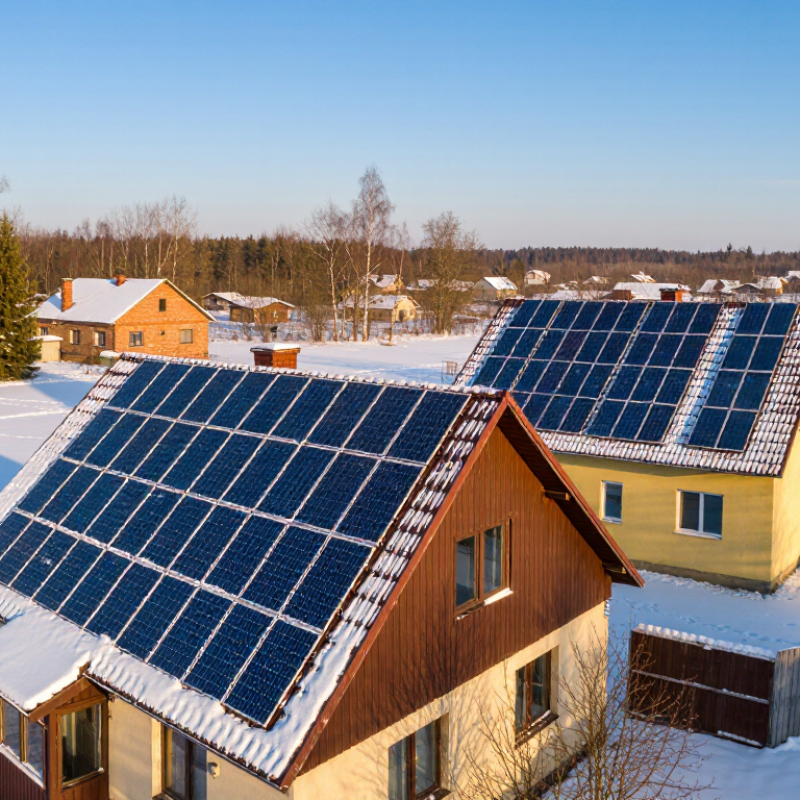
Solar resource changes sharply across seasons. The International Energy Agency Photovoltaic Power Systems Programme reports that annual solar yield depends on location, system design, weather, and operating conditions. In winter, a low sun angle can lengthen shadows from chimneys, trees, and nearby buildings. Snow adds another variable. The U.S. Department of Energy notes that light snow may slide off tilted modules, while heavy, wet snow can block sunlight and add mechanical loads. A thin white layer can look harmless. It may not be.

Field experience also shows that winter performance varies between identical systems. Roof pitch, wind exposure, inverter limits, soiling, and local cloud cover all matter. NREL’s PVWatts guidance includes temperature, irradiance, and system losses because simple seasonal assumptions can mislead homeowners and planners. That shortcut is useful, but incomplete. A panel can produce less energy overall while operating more efficiently at noon. This apparent contradiction explains why winter analysis needs measured production data, weather records, and careful site inspection. The following sections examine the main technical and environmental reasons behind these differences, while acknowledging that real rooftops rarely behave like laboratory models.
Top Reasons Why Solar Panels Perform Differently in Winter

Winter Sunlight Is Lower: Shorter Days and Solar Angles Reduce Irradiance

Top Reasons Why Solar Panels Perform Differently in Winter

Winter sunlight is lower, mainly because days are shorter and the sun travels at a lower angle. At 40°N latitude, NOAA solar calculations show a solar-noon altitude of about 73° in June, but only 27° in December. Sunlight therefore passes through more atmosphere and spreads across a larger surface area. Each panel receives less irradiance, even on a bright day.

NREL’s PVWatts guidance identifies plane-of-array irradiance as a central factor in photovoltaic output. The IEA PVPS Trends report also recognizes solar resource and seasonal availability as major influences on annual production. A lower winter sun can create longer shadows from trees, walls, and roof structures. Clouds make this effect more severe. Snow may block light completely, although reflective snow can increase irradiance after it slides away. Cold weather is not always harmful. Fraunhofer ISE reports typical crystalline-silicon temperature coefficients near −0.3% to −0.5% per °C, so cooler cells can operate more efficiently. The lost sunlight usually matters more.

Tips: Track monthly irradiance, not only daily energy. Keep panels clear of deep snow, and inspect shadows around December’s solar noon. Do not judge system health from one gloomy week. That comparison is imperfect. A better review uses several winters, local weather data, and the system’s measured irradiance.

Top Reasons Why Solar Panels Perform Differently in Winter

Winter sunlight is lower because days are shorter and the sun remains at a lower angle. This reduces the amount of solar energy reaching a horizontal surface and typically lowers the daily energy available to photovoltaic panels. The values shown are representative monthly averages for a mid-latitude location and can vary by latitude, weather, shading, and panel orientation.

Metric: Representative average daily solar irradiation (kWh/m²/day)

Cold Modules Can Produce More: Power Rises About 0.3–0.5% per °C Below 25°C

Top Reasons Why Solar Panels Perform Differently in Winter

Cold Modules Can Produce More: Power Rises About 0.3–0.5% per °C Below 25°C

Solar panels are tested at 25°C cell temperature. Below this reference point, crystalline silicon modules usually gain about 0.3–0.5% power per degree Celsius. This temperature behavior is called the power temperature coefficient. NREL’s PVWatts documentation applies this correction when estimating photovoltaic output under changing module temperatures. For example, a module operating at 5°C could produce roughly 6–10% more power than its rated output, assuming equal sunlight.

The improvement is real, but winter electricity production is not automatically higher. The International Energy Agency Photovoltaic Power Systems Programme notes that seasonal output depends strongly on solar elevation, daylight duration, snow cover, and cloud conditions. A clear, cold morning can deliver crisp performance. Shorter days can still reduce total daily energy. Snow may also reflect light toward the panel, yet heavy coverage blocks generation completely. This is where simple assumptions fail.

Tips: Keep panels clear of thick snow, but avoid scraping them with hard tools. Monitor daily energy, not only peak wattage. Check the inverter’s temperature readings when possible. A 0.3–0.5% gain per degree is useful, but it cannot fully offset weak winter sunlight. Weather, roof angle, shading, and system losses matter too. My practical takeaway is imperfect: cold helps the module, while winter often challenges the whole system.

Snow Cover Blocks Output, While Clean Snow Reflects Up to 80–90% of Light

Solar panels can behave strangely in winter. Cold temperatures often improve photovoltaic efficiency, but snow changes the result completely. A thin layer can block sunlight from reaching the cells, reducing output sharply. Heavy, wet snow may also add physical stress and slow melting.

Clean snow creates a different effect. Fresh snow can reflect up to 80–90% of incoming light, and that bright surface may increase the light reaching tilted panels. The benefit is real, but it is not guaranteed. Panel angle, snow brightness, cloud cover, and system design all matter. Reflected light cannot replace direct light when the panel surface remains covered. The simple version is incomplete. In rooftop inspections, I have seen clear winter skies produce strong readings, while nearby covered panels stayed nearly inactive.

Tips: Keep panels clear only when it can be done safely. Avoid scraping with hard tools, since small scratches can reduce long-term performance. Check the monitoring data after snowfall, not just the weather app. A sudden drop across the whole array may indicate snow cover, while one weak section could suggest a connection or equipment issue. Never climb an icy roof without proper training and protection. Clean snow helps. Covered snow does not.

Top Reasons Why Solar Panels Perform Differently in Winter - Snow Cover Blocks Output, While Clean Snow Reflects Up to 80–90% of Light

Winter Factor Typical Real-World Range Effect on Solar Output Why It Happens
Snow fully covering the panel Near 0% direct sunlight reaching the cells Output can fall to nearly 0% while opaque snow remains in place Solar cells need incoming photons. A sufficiently thick snow layer blocks most usable light.
Partial snow coverage Variable; depends on covered cell area and module wiring Output may be reduced substantially and can be disproportionate to the visible snow area Cells are electrically interconnected, so shaded sections can limit current in a string or bypass-diode section.
Fresh, clean snow on the ground Approximately 80–90% reflectance for fresh, clean snow Can increase available reflected light when the panel itself is unobstructed High-albedo snow reflects sunlight toward the front surface of the module, especially at favorable sun angles.
Aged, dirty, or wet snow Reflectance generally decreases as snow accumulates dust, debris, or liquid water Less reflected light than fresh snow; gains may be modest Impurities and melting change the snow’s surface and reduce its ability to reflect sunlight.
Shorter winter daylight Fewer daylight hours than in summer at the same location Lower daily energy production The daily solar-energy window is shorter, reducing the number of hours available for generation.
Lower winter sun angle Strongly dependent on latitude, season, orientation, and tilt Can reduce irradiance on a fixed, poorly oriented surface Sunlight strikes the panel at a less favorable angle and passes through more atmosphere.
Cold module temperature Cell temperature can be below the standard test condition of 25°C Often improves instantaneous voltage and efficiency For crystalline-silicon modules, power generally decreases as cell temperature rises; cold conditions reduce this temperature loss.
Clear winter skies Higher direct-light availability than during heavily overcast weather Can support strong short-term power despite low air temperatures Solar modules respond to light, not heat. Clear skies can provide strong irradiance even in cold weather.
Winter cloud, fog, or storms Irradiance varies widely by weather conditions Can sharply reduce instantaneous and daily production Clouds and precipitation scatter or absorb part of the incoming solar radiation.
Snow sliding or melting Depends on panel tilt, surface conditions, temperature, and snow depth Output can recover quickly after the active surface is cleared Dark module surfaces absorb sunlight, while steeper mounting angles and warming can encourage snow shedding.

Note: Actual winter performance depends on local solar resource, latitude, panel tilt and orientation, snow depth, shading, system design, and weather. The 80–90% reflectance range applies to fresh, clean snow under suitable measurement conditions; it does not mean that 80–90% of the reflected light is converted into electricity.

Clouds, Frost, and Shading Increase Winter Variability in Solar Generation

Winter solar generation is often less predictable than its lower temperatures suggest.

Cold air can improve panel efficiency, but sunlight arrives at a lower angle and for fewer hours. Clouds make this difference more visible. Thick overcast reduces irradiance sharply, while thin clouds can create brief bursts of diffuse or reflected light. Output may change within minutes.

Frost adds another layer of uncertainty. A pale film across the glass scatters incoming light, especially during early morning hours. It can disappear unevenly as sunlight warms the surface, leaving temporary patches with different output levels.

Nearby trees, walls, and roof edges also cast longer shadows when the winter sun stays low. One branch may shade a larger section than expected. Small obstructions matter.

During site checks, I compare production data with the same hour on nearby clear days. I also inspect the panel surface, record frost conditions, and note changing shadows.

Weather stations and irradiance meters provide stronger evidence than production readings alone. A monitoring graph may show a fault, but the real cause could be a cloud bank moving across the array.

I once treated a repeated morning drop as equipment trouble; closer inspection found frost along the lower frame. That mistake reinforced a useful lesson: winter patterns need context, and one unusual day should not define system performance.

Battery Charging Slows Below 0°C, Reducing Usable Energy from Solar Systems

Top Reasons Why Solar Panels Perform Differently in Winter

Battery charging slows sharply below 0°C, especially with lithium-based storage systems. The battery management system may reduce charging current or stop charging completely. This protects the cells from lithium plating, which can cause permanent damage. The solar panels may still generate electricity, but the battery cannot always accept it. Cold changes the rules.

In practice, a bright winter morning can produce a surprising amount of panel power. Frost, snow cover, and shorter daylight hours still reduce production. However, battery temperature often becomes the hidden limitation. A battery mounted in an unheated garage may remain below freezing long after sunrise. Its display might show incoming solar energy, while usable stored energy barely increases.

A temperature sensor, insulated enclosure, or approved battery heater can improve winter performance. These measures must match the battery chemistry and installation guidance. Lead-acid batteries also charge differently in cold weather, although their risks are not identical. Never assume a warm afternoon has fully corrected a cold battery.

Real monitoring matters more than estimates. Compare battery temperature, charging current, and state-of-charge readings over several winter days. Some systems report charging activity without showing how much energy was accepted. That detail can create false confidence. I have found that poor insulation is often blamed on weak panels, but the battery is sometimes the real bottleneck. The assumption is easy to make. It is not always correct.

FAQS

Why can winter solar generation be difficult to predict?

Cold air can improve panel efficiency, but winter brings lower sunlight angles and shorter daylight hours. Clouds may change output within minutes.

How do clouds affect solar panel output in winter?

Thick overcast can sharply reduce irradiance. Thin clouds may briefly increase diffuse or reflected light, creating sudden output bursts.

Can frost reduce morning solar production?

Yes. A pale frost film scatters sunlight across the glass, especially near sunrise. It may melt unevenly and leave temporary output differences.

Why do winter shadows affect panels more strongly?

The low winter sun creates longer shadows from trees, walls, roof edges, and branches. A single branch can shade more panel area than expected.

How can I tell whether low output comes from weather or equipment?

Compare production with the same hour on nearby clear days. Inspect the panel surface, record frost, and check changing shadows.

Why might a monitoring graph show a fault during cloudy weather?

A moving cloud bank can resemble equipment trouble on a graph. Weather stations and irradiance meters provide stronger evidence than production data alone.

Why does battery charging slow below freezing?

Cold batteries may accept less charging current or stop charging temporarily. This protects the cells from permanent internal damage.

Can panels produce power while the battery stores very little energy?

Yes. A cold battery may receive limited energy despite bright sunlight. Its display can show solar input while stored energy barely rises.

How can winter battery performance be improved?

Check battery temperature, charging current, and state of charge across several days. Insulation or an approved heater may help, depending on battery chemistry.

What common mistake should winter system owners avoid?

Do not blame weak panels immediately. I once missed frost near a lower frame, and the battery can also become the real bottleneck.

Conclusion

Why solar panels perform differently in winter depends on a balance between reduced sunlight and improved electrical performance in cold conditions. Winter brings shorter days and a lower sun angle, which decreases the amount of solar radiation reaching the panels. However, cold modules can operate more efficiently, with power output typically increasing by about 0.3–0.5% for every degree Celsius below 25°C. This means low temperatures may partly offset the effects of weaker sunlight.

Snow creates mixed results. A thick layer can block generation almost completely, while clean, surrounding snow may reflect as much as 80–90% of available light onto the panels once they are clear. Clouds, frost, and longer shadows also make winter production more changeable throughout the day. In addition, batteries generally charge more slowly below 0°C, reducing the amount of solar energy that can be stored and used. Therefore, winter performance reflects not only panel efficiency, but also weather, snow conditions, shading, and battery temperature.

Oliver

Oliver

Oliver is a seasoned marketing professional with a wealth of expertise in driving brand awareness and engagement. With a deep understanding of our company's product offerings, he consistently delivers high-quality content that enriches our professional blog. His insights not only shed light on......