Keeping solar panels clean is not simply a matter of spraying water and wiping glass. Dust, bird droppings, pollen, and mineral stains can reduce light transmission and create stubborn surface marks. Worse, careless cleaning may scratch protective coatings, loosen cables, or cause electric shock.
This guide, “China Top 10 Solar Panel Cleaning Tools: How to Clean Safely?”, examines practical tools for residential, commercial, and rooftop systems. It compares soft-bristle brushes, telescopic poles, purified-water systems, squeegees, microfiber pads, low-pressure washers, and safety equipment. Each tool has a proper purpose. Some are useful only under specific conditions.
Photovoltaic reliability researcher Peter Hacke has emphasized, “The most important thing is preventing damage before it happens.” That principle explains why How to clean solar panels safely begins with inspection, not scrubbing. Check the manufacturer’s instructions, panel temperature, roof access, cable condition, and weather forecast. Never clean hot glass under strong sunlight. Thermal shock can occur when cold water meets heated modules.
Use clean water and non-abrasive materials. Avoid household detergents unless the manufacturer approves them. Slippery soap residue can attract more dust. A soft brush may look harmless, but trapped grit can act like sandpaper.
Safety comes first.
This introduction also leaves room for honest reflection. Cleaning frequency depends on rainfall, pollution, tilt angle, and local dust levels. A tool that works well on a warehouse roof may be unsuitable for a fragile home installation. Results are not always perfect. Careful observation matters more than buying the most expensive equipment.
Classify China’s Top 10 Solar Panel Cleaning Tools by Safety and Use
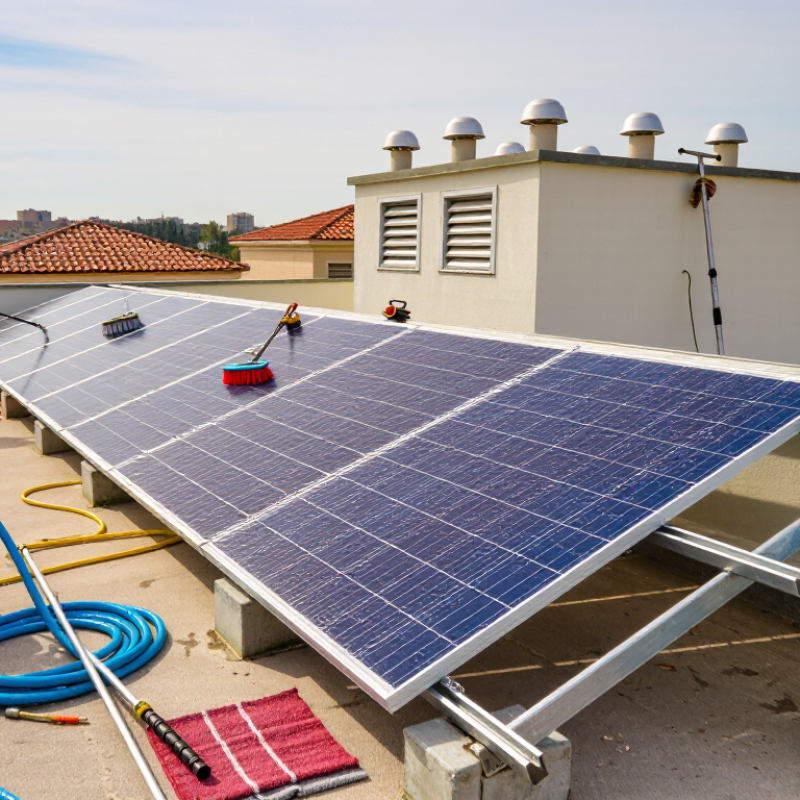
China’s top ten solar panel cleaning tools should be classified by safety and practical use, not popularity alone. The safest group includes dry microfiber pads, soft nylon brushes, telescopic poles, rubber squeegees, and low-pressure water-fed brushes. These tools suit rooftop arrays because they reduce scratching and limit worker movement. A dry microfiber pad works well on light dust. A telescopic pole keeps feet on the roof surface.
The controlled-use group includes deionized-water systems, manual cleaning carts, semi-automatic brush machines, dry robotic cleaners, and sensor-based inspection meters. Deionized water leaves fewer mineral spots, but poor filtration wastes money. Machines can improve consistency on large ground-mounted sites, although loose cables and uneven frames still create hazards. Industry guidance from NREL and IEA PVPS Task 13 identifies soiling as a recurring, site-dependent performance loss. Field studies often report annual energy losses of several percent, with desert and agricultural areas facing higher values. China’s large solar fleet makes repeatable cleaning records increasingly important.
Tips:
Check weather, module temperature, and electrical conditions before cleaning. Use clean tools only. Never stand on modules. Avoid high-pressure spray and harsh detergents. A simple inspection meter can reveal whether cleaning improved output. I still prefer manual tools for small rooftops; robots are not automatically safer. Record water use, stains, cracks, and worker observations after every service. One overlooked detail can damage a good system.
Measure Soiling Before Cleaning: NREL Reports 2–4% Typical PV Losses
Dust can quietly reduce photovoltaic output. NREL reports commonly cited losses of 2–4% from typical soiling conditions. In dry, dusty regions, losses may rise much higher. Guessing by sight is unreliable. A panel can look clean while fine particles cover its surface.
Measure before touching the array. Use a calibrated irradiance meter, reference cell, or dedicated soiling station. Record sunlight, panel temperature, recent rain, and power output. Compare a dirty reference panel with a cleaned reference panel. Keep the same tilt and exposure. This simple comparison shows whether cleaning is financially and technically justified.
For safe work, isolate electrical risks according to site procedures. Use a soft, non-abrasive brush, clean water, and a lightweight extension pole. Avoid pressure washing, harsh chemicals, and scraping dry dust. Early morning reduces thermal shock and glare. Never stand on modules. One practical detail matters: rinse from the upper edge, allowing dirty water to flow away from cleaned areas. Afterward, measure output again under similar sunlight.
The readings may not be perfect. Wind can move dust during testing, and shadows can distort results. Record these weaknesses instead of hiding them. Cleaning every week may waste water when losses remain below the site’s operating threshold. A measured schedule is safer, cheaper, and easier to defend.
Select Water, Brushes, and Robots Within IEC 62446-1 Requirements
Safe solar panel cleaning starts with the water, not the robot. Use clean, low-mineral water to reduce spotting and conductive residue. A conductivity meter can check water quality before work begins. Soft-bristle brushes, microfiber pads, water-fed poles, and rubber squeegees should protect glass and frame seals. Avoid abrasive pads, metal scrapers, and high-pressure jets. They can create scratches or force water into vulnerable areas.
A practical ten-tool set includes a low-pressure hose, deionized-water system, soft brush, microfiber pad, squeegee, telescopic pole, conductivity meter, insulated gloves, warning signs, and a dry-contact cleaning robot. Robots can maintain large arrays, but they still need surface checks. Dust may hide under wheels or remain near clamps. Cleaning should follow the module maker’s instructions and the site’s electrical isolation procedure. Wet surfaces increase slip and electrical hazards. Keep workers away from exposed conductors and damaged modules.
IEC 62446-1 focuses on photovoltaic system documentation, inspection, and verification. It does not prescribe a particular brush or robot. However, cleaning supports a clearer visual inspection and more reliable commissioning checks. After cleaning, technicians should examine cracks, loose cables, connector damage, water ingress, and frame movement. Electrical tests must use suitable instruments and qualified personnel. One practical weakness remains: teams sometimes clean first and inspect later, missing defects hidden by grime. A second review under steady daylight is slower, but often catches what rushed work overlooks.
Clean Safely: Isolate Electrical Risks and Avoid Walking on Modules
Safe solar panel cleaning begins with electrical isolation, not water or tools. Before work, switch off the inverter and isolate both AC and DC circuits. A qualified technician should verify zero voltage with a properly rated meter. Lockout procedures can prevent someone from restoring power unexpectedly. Wait for the equipment’s specified discharge time. Morning work is often cooler, but sunlight can still produce dangerous DC voltage.
Choose tools that keep your feet on the ground. A soft brush, non-abrasive squeegee, low-pressure hose, deionized water, and an adjustable extension pole are useful choices. Never walk on modules. Their glass may look strong, yet hidden cracks can develop under concentrated weight. Use a stable platform or approved access system instead. Keep connectors, junction boxes, and cable joints dry. Do not spray directly at them. Stop during rain, strong wind, or visible surface damage.
Small details matter. A dirty pole handle can slip when wet. A metal tool can also create an unwanted electrical path. I once underestimated how quickly a panel surface heated under direct sun; the water dried before the brush could lift the dust. That mistake showed me that slower, cooler cleaning is safer. Inspect the array afterward, but do not touch exposed conductors. If isolation cannot be confirmed, postpone the task and request qualified assistance.
Verify Cleaning Results Using IEC 61724-1 Performance Monitoring Methods
Cleaning solar panels safely requires more than choosing brushes, squeegees, water-fed poles, or low-pressure washers. The real test is whether cleaning improves reliable energy production. IEC 61724-1 provides a useful framework for monitoring photovoltaic system performance through irradiance, module temperature, ambient conditions, and electrical output. These measurements make cleaning results easier to verify.
Record the array’s power, plane-of-array irradiance, and module temperature before cleaning. Use the same sensors after cleaning. Keep the comparison period similar, preferably during stable sunlight. A sudden cloud can hide a poor cleaning result. Calculate performance using measured energy output against available solar irradiance, while noting inverter downtime and unusual shading. Compare several days, not just one impressive afternoon.
Small details matter. Check whether brush marks, dry water spots, or loose dust remain near the frame. Never pressure-clean cracked glass or exposed wiring. Use insulated equipment and follow the site’s safety procedures. A clean surface can still produce less power if a connector is damaged.
Be careful with conclusions. IEC 61724-1 supports consistent performance monitoring, but it does not prove that every cleaning tool is suitable for every array. Sensor accuracy, sampling intervals, weather changes, and soiling patterns can distort results. I would repeat the test across different conditions and keep a written cleaning log. Sometimes, the data challenges expectations. That is useful.
FAQS
Typical soiling may reduce output by about 2–4%. Dry regions can experience higher losses. Appearance alone misleads.
Measure irradiance, panel temperature, recent rain, and power output before cleaning. Compare dirty and cleaned reference panels under similar conditions.
Use clean, low-mineral water, soft brushes, microfiber pads, squeegees, and lightweight extension poles. A conductivity meter can check water quality.
Avoid abrasive pads, metal scrapers, harsh chemicals, and high-pressure jets. Do not scrape dry dust. It may scratch the glass.
Early morning usually reduces glare and thermal shock. Isolate electrical risks according to site procedures. Never stand on modules.
Rinse from the upper edge. Let dirty water flow away from cleaned sections. Check frames and lower edges for remaining spots.
Robots can maintain large arrays, but they are not perfect. Dust may remain near clamps or under wheels. Inspect the surface afterward.
Record power, sunlight, and module temperature before and after cleaning. Use similar conditions. Compare several days, not one bright afternoon.
Clouds, wind, shadows, sensor errors, and inverter downtime can distort readings. Record these weaknesses honestly. The data may challenge expectations.
Use measured losses and the site’s operating threshold. Weekly cleaning may waste water when output losses remain small. The schedule may need revision.
Conclusion
This guide explains How to clean solar panels safely by comparing China’s top 10 solar panel cleaning tools according to their safety features, cleaning effectiveness, and suitability for different installation environments. It covers manual brushes, water-fed systems, low-pressure equipment, and automated options, helping users choose tools that reduce scratches, surface stress, and unnecessary water use. Before cleaning, measuring dust and soiling levels is essential, since typical photovoltaic losses may reach 2–4% under common conditions.
The article also highlights the importance of selecting water, brushes, and robotic equipment that align with IEC 62446-1 safety expectations. Cleaning should begin only after electrical risks are properly isolated, and workers should avoid walking directly on modules. Finally, users can confirm whether cleaning improved system output by applying performance monitoring methods consistent with IEC 61724-1, comparing operating data before and after maintenance.

 GeoSyn Solar