Solar smart home integration connects rooftop panels, batteries, inverters, sensors, and household appliances through one coordinated energy system. Instead of treating solar electricity as occasional power, the home responds to changing production and demand. A sunny afternoon might charge the battery, heat water, or run a washing machine. At night, stored energy can support essential loads.
The central question is “How to integrate solar energy with smart home systems” without creating unnecessary complexity. Mark Z. Jacobson, Stanford professor and renewable-energy researcher, offers a useful perspective: “The sun provides more energy to the Earth in one hour than humanity uses in a year.” That principle explains solar’s potential, but practical performance depends on system design. An installer must examine roof direction, shading, battery capacity, electrical loads, and local grid conditions. Details matter.
A smart energy-management platform then connects these components. It can monitor solar output, electricity prices, weather forecasts, and household consumption. Some systems automatically delay electric-vehicle charging until solar production rises. Others reserve battery power for evening demand or outages. The system is not magic. Poor settings can waste energy, and incompatible devices may limit automation. Homeowners should also review data privacy, maintenance needs, and backup priorities before installation.
This article introduces the main equipment, control methods, safety considerations, and realistic benefits of solar smart home integration. It also questions a common assumption: more automation does not always mean better efficiency. Good integration should feel simple, remain measurable, and match the household’s actual habits.
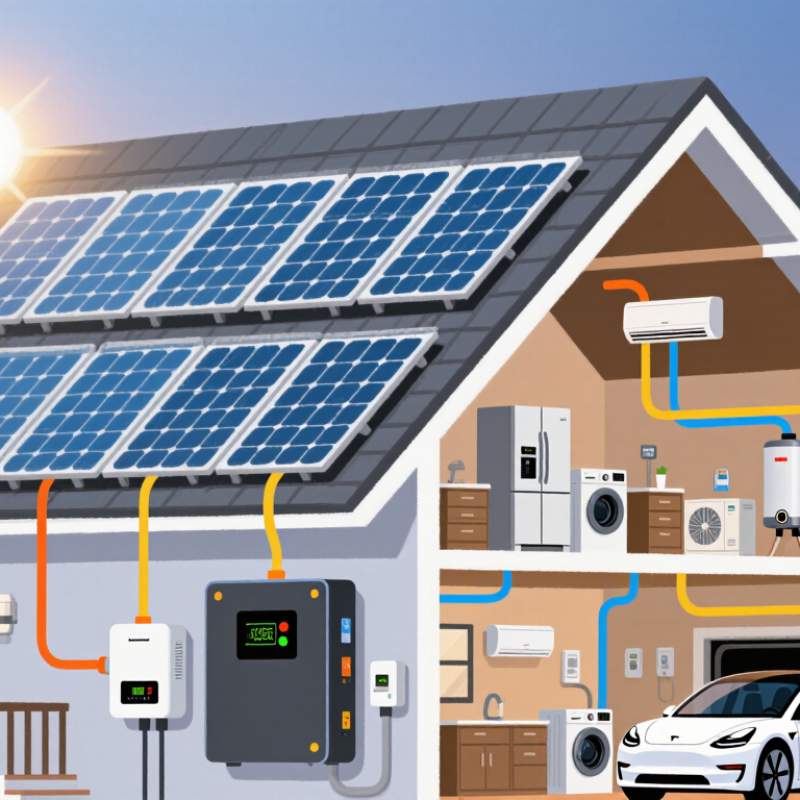
Solar smart home integration means connecting solar generation with the home’s everyday energy decisions. It is more than installing rooftop panels and checking an app. The system links solar modules, an inverter, batteries, smart meters, electric heating, appliances, and vehicle charging. These devices share information about production, demand, weather, and electricity prices.
The International Energy Agency’s Renewables 2024 report states that global renewable capacity grew by nearly 510 gigawatts in 2023. Solar photovoltaic systems contributed about 375 gigawatts, showing why homes need better energy coordination. In a practical setup, solar power can run a heat pump during strong daylight. Surplus electricity may charge a battery or an electric vehicle. Later, stored energy can support evening cooking and lighting.
The U.S. Department of Energy’s Pathways to Commercial Liftoff: Virtual Power Plants report estimates that flexible distributed resources could provide 80–160 gigawatts of capacity by 2030. Smart homes may become part of that flexibility. A controller can reduce charging when the grid is strained, then restore it during cheaper periods. That sounds efficient, but it is not flawless. Cloud cover can change output within minutes. Forecasts can be wrong. Some households may also lose savings through poor settings or battery degradation. I would not call every connected appliance smart; it must respond reliably, safely, and measurably to real energy conditions.
A solar-connected smart home combines solar panels, an inverter, a battery, and household devices. Solar panels produce direct-current electricity from sunlight. The inverter converts it into alternating current for lighting, appliances, and heating systems. A smart meter records production and household demand in near real time. This information helps the system decide when to use, store, or export energy.
The battery stores extra power generated during bright afternoon hours. Later, it can supply the refrigerator, lights, or water heater after sunset. An energy management system coordinates these decisions through sensors and programmed settings. For example, it may run a washing machine when solar output is high. Timing matters. A connected thermostat can also adjust indoor temperature before peak evening demand, reducing unnecessary battery use.
A stable home network allows the devices to communicate, but it should not be treated as a perfect solution. A forecast can be wrong. Cloud cover may reduce generation, while an aging battery may hold less energy than expected. I recommend checking system data regularly and keeping manual controls available. Professional installation should verify wiring, electrical protection, ventilation, and local grid requirements. Cybersecurity also matters, so users should update software and protect account access. The system is useful, but it still needs human judgment.
Smart sensors, energy meters, automated controls, batteries, and solar inverters help households monitor and shift electricity use toward periods of higher solar production.
The chart uses a representative residential electricity-use distribution based on commonly reported U.S. household end-use patterns. Actual consumption varies by climate, home size, equipment, and occupant behavior.
Solar smart home integration begins with a physical energy pathway. Rooftop panels produce direct current, then an inverter converts it into usable alternating current. The home consumes that power first. Excess electricity can charge a battery or move through the meter toward the grid.
Think of a sunny afternoon. A washing machine runs, the battery fills, and unused electricity exports. At sunset, stored energy can support lights, refrigeration, and heating.
A home energy management system monitors these flows through meters and connected controls. It may delay water heating until solar production rises. Small timing changes matter.
The International Energy Agency reported about 420 gigawatts of new solar photovoltaic capacity in 2023. This growth increases the importance of household coordination, not only panel capacity. The U.S. Energy Information Administration also identifies residential electricity demand as strongly affected by heating, cooling, and appliance use. Those loads can overwhelm a small system quickly.
A professional design checks roof output, inverter limits, battery efficiency, electrical safety, and local grid rules. It also studies hourly consumption rather than relying on annual totals. Annual figures can hide winter shortages.
Forecasts are never perfect. Clouds change the plan. A battery may preserve evening power, but conversion losses reduce the final amount delivered. The best systems therefore prioritize essential loads and use real-time data carefully.
Solar smart home integration connects rooftop panels, a home battery, smart meters, and household devices through one energy management system. The system reads solar production and electricity demand in near real time. A digital meter may show panels producing 4.2 kilowatts while the home uses only 1.6. The controller can direct the extra power to a battery or a water heater.
Smart devices help shift energy use toward sunny hours. A washing machine can run when solar output rises. A home battery can charge after breakfast, then support cooking and lighting later. Temperature sensors may adjust heating or cooling in small steps. This reduces sudden energy demand. It also makes better use of electricity produced on-site.
Automation is not always perfect. A cloudy afternoon can change the plan within minutes. Forecasts can be wrong, and an appliance may ignore a delayed schedule. Reliable systems use safety limits, manual controls, and clear energy data. I would still check the battery level before a storm or evening event. That small habit matters. Devices should also protect user data and receive regular software updates. A smart home should explain why it changes a device’s schedule, not quietly make every decision for the homeowner.
Solar smart home integration links rooftop panels, inverters, batteries, appliances, and home energy software. A central controller reads solar output, household demand, battery levels, and electricity prices. It can delay water heating until midday or charge an electric vehicle during peak sunlight. The meter becomes a messenger.
The benefits are practical. A household may use more self-generated electricity and reduce grid purchases. Batteries can preserve evening power after the roof turns dark. The International Renewable Energy Agency reported 585 gigawatts of new renewable capacity in 2024. Solar supplied about 452 gigawatts, or 77% of that growth. This expansion makes flexible home demand increasingly valuable.
Limits remain. Batteries cost money, lose energy during charging, and need replacement planning. A cloudy afternoon can disrupt an impressive forecast. Software may also misread occupancy or sudden appliance use. That weakness matters. The International Energy Agency’s Renewables 2024 report recorded roughly 420 gigawatts of solar additions in 2023, showing rapid growth but not universal reliability. Future systems will likely combine better weather prediction, safer storage, dynamic tariffs, and local energy sharing. Cybersecurity and data ownership need equal attention. Progress is real, but household automation can still make poor decisions.
It connects solar panels, an inverter, batteries, meters, appliances, heating, and vehicle charging. These devices share energy data.
If panels produce 4.2 kilowatts and the home uses 1.6, the controller redirects the surplus. It may charge a battery or heat water.
Sunny hours are usually best. A washing machine can run around midday, when rooftop output is higher.
Yes. It can charge after breakfast and support cooking, lighting, or cooling after sunset. Some energy is lost during charging.
The system can delay vehicle charging or water heating during expensive periods. It may restore those activities later.
No. Clouds can reduce output within minutes, and forecasts can be wrong. An appliance might also ignore a delayed schedule.
Check the battery level, backup settings, and manual controls. Do not trust automation blindly. That habit matters.
Devices should protect energy data and receive regular updates. Clear explanations, safe limits, and human override controls are important.
Not necessarily. Batteries, replacement planning, poor settings, and unexpected demand can reduce savings. The result needs regular review.
Better weather forecasts, safer storage, flexible pricing, and local energy sharing may help. Still, software can make poor decisions.
Solar smart home integration connects a home’s solar panels, battery storage, smart meter, and connected appliances into one coordinated energy system. It allows homeowners to monitor solar production, household consumption, battery status, and grid exchange in real time. Solar energy typically powers essential loads first, while surplus electricity charges the battery or is sent to the grid. When solar production falls, stored energy can support the home before additional electricity is drawn from the grid.
Understanding How to integrate solar energy with smart home systems involves using intelligent controls that adjust energy use according to generation, demand, time, and battery capacity. Smart devices can schedule flexible tasks, such as water heating or vehicle charging, when solar power is most available. This approach can improve energy efficiency, reduce reliance on external electricity, and increase resilience. However, performance depends on weather, equipment capacity, installation costs, and system compatibility. Future developments may bring more accurate forecasting, automated energy decisions, and stronger coordination between homes and local energy networks.

GeoSyn Solar