China’s solar battery market is expanding rapidly, but overcharging remains an overlooked storage risk. The IEA’s Batteries and Secure Energy Transitions report recorded more than 40 GW of new battery storage capacity worldwide in 2023. More homes and businesses now depend on batteries during cloudy evenings, power interruptions, and peak-price periods. That growth makes correct charging control increasingly important.
How to protect solar batteries from overcharging begins with chemistry-specific settings. Lithium iron phosphate, lead-acid, and nickel-based batteries do not accept identical voltage limits. A charge controller must match the battery manufacturer’s instructions. Its absorption, float, and cutoff settings deserve careful checking. Sensors should also measure battery temperature, especially inside a hot outdoor cabinet. One loose terminal can distort readings. One incorrect setting can keep current flowing after the battery is full.
Isidor Buchmann, founder of Cadex Electronics, warns, “Over-charging causes the battery to heat up.” His guidance, published by Battery University, reflects a practical battery-safety concern. Heat may shorten service life before users notice visible damage. Sandia National Laboratories also identifies overcharge as a condition that can contribute to thermal runaway in lithium-ion systems. The risk is not identical for every battery type, but ignoring it is poor engineering.
Real installations need more than a neat checklist. Firmware can fail. Temperature probes can drift. Users may replace a battery without updating controller settings. Regular inspections should review voltage history, alarm records, cable temperature, and enclosure ventilation. The uncomfortable truth is simple: even a well-designed solar system can become unsafe when maintenance stops. Reports provide evidence, but daily observation protects the equipment.
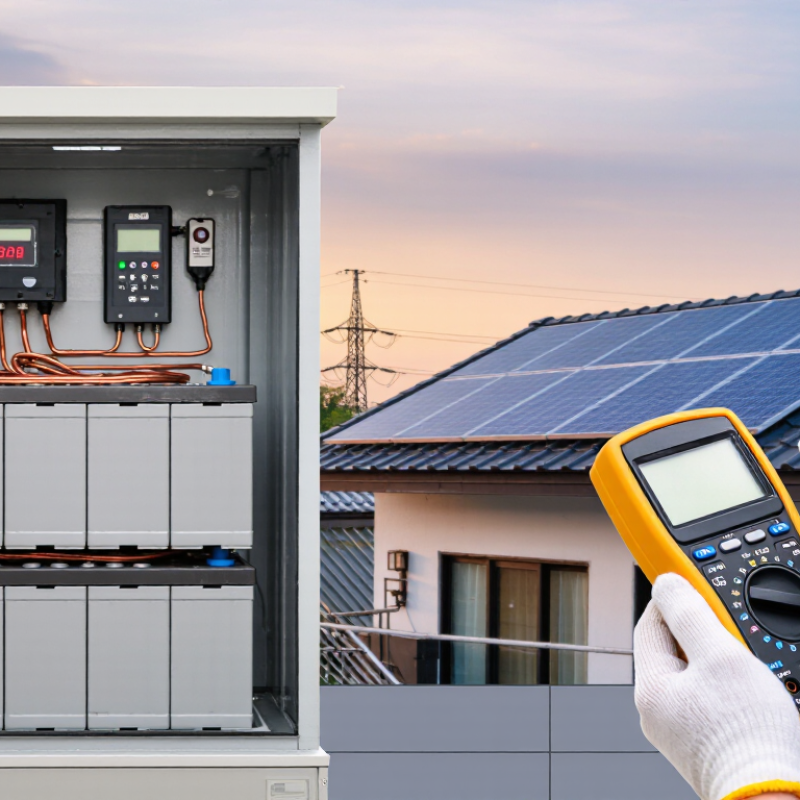
Overcharging is one of the most damaging risks in a solar battery system. It occurs when charging continues after the battery reaches its safe voltage. Excess energy can create heat, gas, swelling, and permanent capacity loss. In severe cases, damaged cells may become unstable. The danger is often quiet at first. A warm battery cabinet or a sharp chemical smell may be the only early warning.
A reliable system needs a correctly programmed charge controller and a compatible battery management system. Confirm the battery chemistry, absorption voltage, float voltage, and maximum charging current before commissioning. Temperature matters too. A sensor placed near the battery can adjust charging during hot or cold weather. Loose terminals and undersized cables also create resistance and heat. Keep the battery area dry, clean, and adequately ventilated. Do not cover warning labels or cooling openings.
Regular inspection provides practical protection. Record daily voltage, charging current, and unusual temperature changes. If the voltage stays high after full charge, stop relying on assumptions and investigate the controller, sensor, and wiring. A protective fuse does not prevent overcharging; it mainly limits fault current. No checklist is perfect. Sensors can fail, settings can be entered incorrectly, and aging batteries may behave differently. Independent testing by a qualified technician is sensible when readings conflict or swelling appears. Never continue normal operation with a visibly damaged battery.
| Battery Chemistry | Typical 12 V Charging Range at 25°C | Float-Charge Guidance | Main Overcharging Risks | Recommended Prevention Measures |
|---|---|---|---|---|
| Flooded Lead-Acid |
Absorption: approximately 14.4–14.8 V Equalization: approximately 15.0–16.0 V, only when permitted by the battery manufacturer |
Typically 13.2–13.8 V. The exact value depends on battery design and temperature. | Electrolyte loss, excessive gassing, corrosion, heat buildup, and reduced service life. | Use a temperature-compensated charge controller, maintain electrolyte levels with approved water, provide ventilation, and use equalization only according to the battery specifications. |
| AGM Lead-Acid | Absorption: commonly approximately 14.2–14.6 V | Typically approximately 13.2–13.8 V. Avoid settings intended for flooded batteries unless specifically approved. | Dry-out, venting, internal pressure increase, thermal damage, and permanent capacity loss. | Select the AGM profile on the controller, disable automatic equalization unless explicitly allowed, and install a temperature sensor where possible. |
| Gel Lead-Acid | Commonly approximately 14.0–14.4 V; always follow the manufacturer’s specified limit. | Typically approximately 13.2–13.8 V. | Gas formation inside the gel, voids in the electrolyte, irreversible capacity loss, and valve damage. | Use a dedicated gel charging profile, avoid high-voltage equalization, and verify that the controller cannot exceed the battery’s absorption limit. |
| LiFePO₄ Lithium-Ion | Commonly approximately 14.0–14.6 V for a 12 V-class battery pack, depending on the battery management system and pack design. | Continuous float charging is generally unnecessary unless specifically approved by the battery manufacturer. | BMS cutoff events, cell imbalance, accelerated aging, overheating, and possible safety hazards if protection systems fail. | Use a lithium-specific controller profile, set the correct maximum voltage, keep equalization disabled, and ensure the battery has a properly rated BMS with overvoltage protection. |
| Nickel-Based Battery | Charging voltage varies significantly by nickel chemistry, cell count, temperature, and charging method; use the battery manufacturer’s limits. | Trickle or float charging may be possible for some nickel chemistries, but the current and voltage must be specifically configured. | Electrolyte heating, pressure buildup, water loss, reduced capacity, and shortened cycle life. | Use a compatible charge algorithm, monitor temperature, limit charge current, and never apply a lead-acid or lithium profile without confirmation of compatibility. |
| System-Level Overcharging Prevention Checklist | ||||
| Charge Controller Configuration | Program the battery chemistry, nominal system voltage, absorption voltage, float voltage, maximum charging current, and absorption duration. | Incorrect settings can maintain the battery at an excessive voltage for too long. | Use a controller with programmable setpoints, automatic charge termination, and overvoltage protection. | |
| Temperature Compensation | Lead-acid charging voltage generally requires compensation of roughly −3 to −5 mV/°C per cell; the exact coefficient depends on the battery. | Charging at a fixed voltage in high temperatures can increase overcharging risk. | Install the temperature sensor directly on or near the battery and follow the battery manufacturer’s compensation value. Lithium batteries normally require a different temperature strategy. | |
| Battery Management System | A lithium battery BMS should monitor individual cell voltage, pack voltage, temperature, charge current, and discharge current. | A failed or incorrectly configured BMS may not disconnect charging when a cell reaches its upper voltage limit. | Use a certified, properly rated BMS and verify that its charge-disconnect threshold is compatible with the charger. | |
| Voltage and Current Monitoring | Measure battery voltage at the battery terminals, especially during absorption and high solar production. | Cable voltage drop, loose connections, or inaccurate controller readings can cause improper charging. | Inspect terminals and cables, use correctly sized conductors, and compare controller readings with a calibrated multimeter. | |
| Warning Signs | Unusual heat, swelling, strong odor, frequent high-voltage alarms, excessive gassing, electrolyte loss, or repeated BMS shutdowns. | These symptoms may indicate overcharging, internal damage, or an incorrectly configured system. | Stop charging if safe to do so, isolate the battery from the solar source, ventilate the area, and obtain qualified technical assistance. | |
| Technical note: Voltage values are typical reference ranges for 12 V-class systems at approximately 25°C. Actual limits vary by battery construction, cell count, manufacturer specifications, temperature, and charge-controller design. The battery manufacturer’s installation and charging instructions take priority over these general values. | ||||
Overcharging continues after the battery reaches its safe voltage. It can cause heat, gas, swelling, and permanent capacity loss. The danger may appear quietly.
Watch for a warm battery cabinet, swelling, or a sharp chemical smell. A high voltage after full charge also deserves investigation. Do not ignore small changes.
Match the controller with the battery chemistry and system voltage. Check absorption, float, cutoff voltage, and maximum charging current. Small setting errors matter. Use the battery datasheet.
No. Lithium, lead-acid, and gel batteries need different charging limits. Equalization may damage some lithium batteries. Disable it unless specifically approved. Simple is safer.
Temperature sensors can adjust charging during hot or cold conditions. Place the sensor firmly against the battery case. Keep it away from direct sunlight. Sensor placement matters.
Record voltage, charging current, and unusual temperature changes each day. Inspect cable size, terminals, sensors, ventilation, and controller settings. Loose connections can create heat and misleading readings. Check the basics.
A battery management system should monitor cell voltage, temperature, current, and charge level. It should balance cells and disconnect charging during unsafe conditions. However, it should not be the only protection. No checklist is perfect.
Review testing for overcharge protection, thermal performance, short-circuit resistance, and communication failures. Confirm that the inverter voltage matches the battery’s approved range. Documentation quality can vary. Ask for evidence.
Compare the controller display with a calibrated multimeter. Check the sensor, wiring, and inverter settings. A qualified technician should perform independent testing when swelling appears. Do not continue normal operation with visible damage.
Presets may not match the battery or installation conditions. I once trusted a preset and missed a sensor fault. That changed my process. Verify settings manually, then review them after seasonal changes or battery replacement.
Overcharging is one of the most common causes of reduced capacity, overheating, swelling, and premature failure in solar battery systems. To understand how to protect solar batteries from overcharging, users should first assess the battery’s chemistry, rated voltage, charging limits, and built-in safety features. Selecting a properly matched charge controller and configuring the correct battery settings are essential for preventing excessive voltage and current. The controller should support appropriate charging stages, automatic cutoff protection, and compatibility with the solar panel and battery specifications.
Regular monitoring also improves system safety and performance. Check battery voltage, temperature, charging current, and overall charging behavior to identify unusual changes early. Protection systems, including fuses, temperature sensors, and battery management controls, should be inspected and maintained regularly. If a battery becomes unusually hot, produces an odor, swells, or shows unstable voltage, stop charging it safely and arrange a professional inspection. With correct settings, reliable monitoring, and timely maintenance, solar battery users can extend service life and reduce the risks associated with overcharging.

 GeoSyn Solar