China Top 10 Ways to Optimize Solar Street Lights in Cities

Time:2026-11-11 Author:Madeline
0%

Solar street lights can improve visibility on city streets while reducing reliance on grid power. But reliable performance depends on more than choosing a bright lamp. Nearby buildings, tree canopies, traffic patterns, and seasonal weather all affect how much sunlight a panel receives. A narrow street may need a different layout from an open parking area. Small details matter.

This guide explores China Top 10 Ways to Optimize Solar Street Lights in Cities, with practical considerations for planners, installers, and property managers. It examines site surveys, panel placement, battery capacity, LED selection, pole spacing, controls, maintenance, and monitoring. The goal is to answer How to optimize solar street lights for urban areas without treating every location as identical. For example, a panel shaded by a mature tree may need repositioning, while a busy junction may require carefully directed light to avoid dark gaps and unnecessary glare. Local climate and lighting needs should guide equipment choices.

No single configuration works everywhere. Actual results depend on sunlight, installation quality, component specifications, and ongoing care. Even a well-planned system can underperform if dust builds up on panels or batteries age sooner than expected. That is worth remembering. Energy estimates should be checked against real site conditions, not just catalogue figures. This article offers useful starting points, but some recommendations will need adjustment after installation. Careful testing and routine inspection help reveal what works—and what does not.
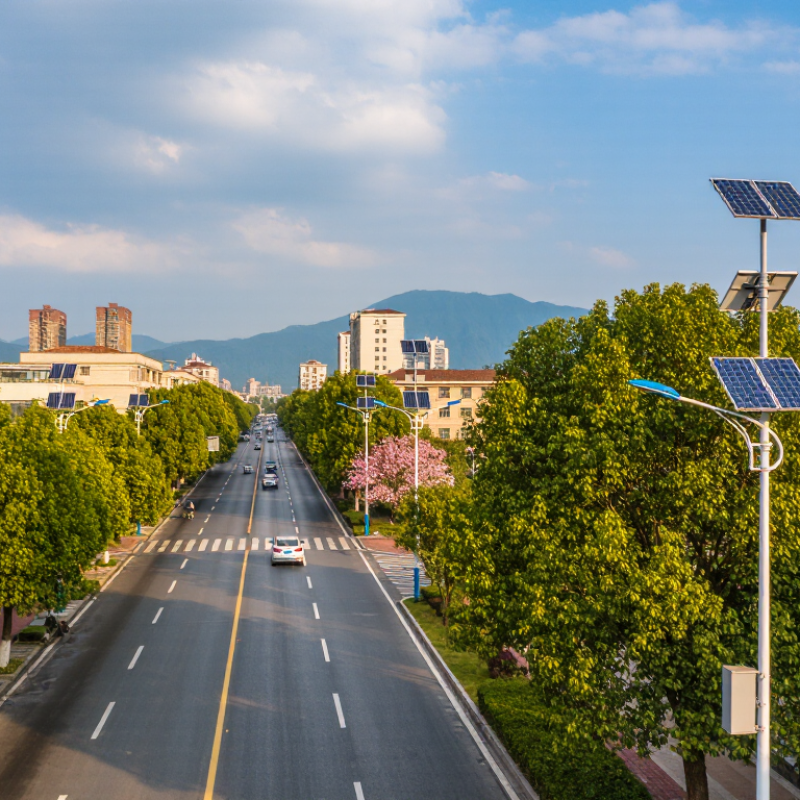
China Top 10 Ways to Optimize Solar Street Lights in Cities

Understanding Solar Street Lighting Needs in Chinese Cities

Understanding Solar Street Lighting Needs in Chinese Cities

Chinese cities do not share one lighting profile. Dense residential lanes, wide ring roads, parks, and industrial districts need different brightness levels and operating hours. The National Bureau of Statistics reported that China’s urbanization rate reached 66.16% in 2023. That growth puts more pressure on safe, consistent nighttime lighting. Yet local conditions matter just as much. Winter fog in the Yangtze River Delta, dusty air in northern cities, and shaded streets can all reduce charging performance.

Solar street lights need to be sized for the weakest month, not the sunniest afternoon. The International Energy Agency’s Renewables 2023 report recorded a major expansion in China’s solar market, but grid-scale growth does not guarantee reliable sunlight at every street location. A site survey should check daily sunshine, tree cover, pole spacing, traffic patterns, and nearby building shadows. It should also measure actual nighttime use. A bright road at 2 a.m. may need a different dimming schedule from a quiet residential lane. I have seen designs lean too heavily on annual solar averages; winter autonomy deserves a harder look.

Tips: Record several nights of real usage before setting dimming levels. Check panel shade at different seasons, not just during installation. Keep battery access practical for maintenance. Small details matter.

Assessing Sites, Sunlight, and Urban Lighting Requirements

A reliable solar street-light plan starts with a careful site walk, not a catalogue. Record pole positions, nearby trees, building heights, and the direction each street faces. A building may shade a panel for two hours each afternoon, even when the road looks sunny at noon. Check the site in different seasons where possible. Winter days are shorter, and bare branches can change the shade pattern. Small details matter. A parked delivery van can also block sunlight at a narrow curb.

Then assess what the street actually needs after dark. A quiet residential lane, a busy crossing, and a bus stop do not require the same light distribution. Note pedestrian routes, bends, entrances, and places where shadows could hide a step or obstacle. Compare proposed spacing and mounting height with measured light levels, uniformity, and applicable municipal criteria. Avoid simply increasing brightness; glare can make faces and road edges harder to see. Solar availability should be checked alongside expected nightly operating hours, cloudy-day reserves, and seasonal demand. One assumption may still be wrong. A brief night-time review can reveal dark patches that daytime plans miss.

China Top 10 Ways to Optimize Solar Street Lights in Cities - Assessing Sites, Sunlight, and Urban Lighting Requirements
No. Optimization Method Site and Sunlight Assessment Urban Lighting Requirement Practical Design Check
1 Screen locations using local solar-resource data Compare monthly solar-resource data for the project city rather than relying on a national average. Solar availability varies substantially across China, and winter conditions can differ from annual averages. Identify the months when dependable lighting is most important, including winter periods with shorter daylight hours and potentially longer operating nights. Size the system against the least favorable design month using a recognized local solar dataset and site-specific assumptions.
2 Survey shade throughout the day and year Record shadows from buildings, trees, signs, elevated roads, and other poles. Check seasonal tree growth and the sun path, not just conditions at midday on one visit. Prioritize locations where reliable illumination is needed at intersections, crossings, bus stops, and pedestrian routes. Document shading by hour and season; relocate the panel or pole if nearby obstructions significantly reduce the available charging window.
3 Choose panel orientation and tilt for the actual site Where the layout permits, assess an unobstructed, generally south-facing panel orientation in China. Select tilt using latitude, seasonal energy needs, wind loading, and the panel's mounting position. Keep the panel clear of the luminaire and other equipment, while avoiding glare or interference with nearby buildings and road users. Confirm orientation and tilt in the installation drawings; verify that the final pole position does not introduce new shade.
4 Match light output to road class and use Assess road width, traffic, pedestrian activity, surrounding land use, and ambient lighting. Different streets and public spaces do not require the same lighting level. Set photometric targets in accordance with applicable Chinese standards, including the relevant road-lighting provisions of CJJ 45, and local requirements. Specify maintained illuminance or luminance, uniformity, and glare limits as applicable; do not use a single lux target for every street.
5 Optimize pole spacing with photometric modelling Use measured road geometry, mounting height, pole setback, carriageway width, and any median or sidewalk constraints. Provide consistent coverage along the road and at conflict areas without leaving dark gaps between luminaires. Model the selected luminaire distribution and layout, then check maintained performance and uniformity against the project requirements.
6 Apply scheduled or sensor-based dimming Use traffic patterns and pedestrian activity to identify periods when reduced output is appropriate. Consider local safety needs and operating rules. Maintain the required lighting level during busy periods and at crossings or other locations where visibility is critical. Define tested dimming profiles, minimum output levels, and fallback behavior; confirm that controls do not compromise applicable lighting requirements.
7 Size batteries for autonomy and operating conditions Account for expected nighttime load, cloudy-weather periods, battery temperature, allowable depth of discharge, and aging. Set a project-specific autonomy requirement based on the importance of the route and the local maintenance response time. Calculate usable battery energy—not just nameplate capacity—and verify charging, protection, and low-temperature performance for the selected battery chemistry.
8 Balance panel capacity against the worst-month load Include daily lighting energy, controller losses, battery charging losses, and the site’s monthly solar conditions in the energy calculation. Use the actual operating schedule and any dimming profile to estimate nightly energy demand. Check that expected monthly generation can support the load and restore the battery after low-sun periods; validate assumptions with a seasonal energy model.
9 Coordinate poles with trees and street infrastructure Review planting plans, mature tree canopies, building setbacks, utility corridors, drainage, and access for maintenance before choosing pole locations. Keep the light distribution useful for road users and pedestrians while avoiding obstruction of signs, crossings, and accessible paths. Check sightlines and future canopy growth, and ensure the panel, luminaire, and battery enclosure remain accessible for inspection and service.
10 Commission and monitor the installed system Compare actual panel exposure, charging behavior, battery condition, and nighttime operation with the design assumptions. Verify light levels and uniformity after installation, including at representative road sections and pedestrian areas. Record commissioning measurements and review faults, battery state, and operating hours periodically; use field results to adjust settings and maintenance plans.

Optimizing Panels, Batteries, LEDs, and System Sizing

Urban solar street lighting works only when the panel, battery, LED, and controller are sized as one system. A panel may look adequate at noon, yet a nearby tower can shade it after 3 p.m. Measure shade across seasons, not during one site visit. Keep panels clear of dust, leaves, and rooftop runoff. Small details matter.

Battery capacity should reflect the longest low-sun period, nightly operating hours, and expected aging. In hot cabinets, battery life can fall faster than planners expect. Provide ventilation and avoid placing enclosures against sun-heated walls. Specify usable capacity, not just nominal watt-hours. A modest reserve helps, but oversizing adds cost and may leave energy unused. This trade-off deserves review.

Choose LED output and optics for the road, not the catalog headline. A narrow beam can brighten pavement while leaving crossings dim, so check measured illuminance at lane edges and pedestrian areas. Size the system with local winter solar data and the actual dimming schedule. Include controller losses and cloudy-day autonomy. Field readings may disagree with the model. Recheck after installation.

Using Smart Controls to Improve Efficiency and Reliability

Cities need more than brighter lamps. Smart controls can match light output to street activity, weather, and battery condition. On residential roads, motion sensors can raise brightness as pedestrians approach, then dim it after the street clears. Keep a safe baseline; darkness should never be the energy-saving plan.

A practical control system needs clear rules. Set dimming schedules around sunrise and sunset, and adjust them seasonally with a light sensor. Check sensor placement near trees, shop windows, and reflective walls. These details matter. A poorly placed sensor can trigger needless changes or leave a path dim when it is busy. During field checks, compare control logs with what technicians see on the street.

Remote monitoring helps crews spot weak batteries, failed lamps, and communication gaps before complaints pile up. Yet data can be incomplete, especially when network coverage is patchy. Keep local settings so each light follows a dependable schedule during outages. Review energy use and fault records monthly, then adjust one setting at a time. This is slower. It also makes results easier to trust. Leave room for human judgment: a system may detect movement, but cannot always explain why a public space feels unsafe.

Planning Installation, Maintenance, and Performance Evaluation

City projects perform better when planning begins with a street-by-street audit. Record pole spacing, mounting height, road width, tree cover, and existing night-time light levels. Match optics and output to each street, rather than using one setting everywhere. During installation, check aiming and shielding from the pavement; a small tilt can send light into windows or the sky. Keep records. The U.S. Department of Energy’s 2017 Energy Savings Forecast of Solid-State Lighting projected 569 terawatt-hours of annual U.S. electricity savings by 2035 from LED adoption across lighting, compared with a no-LED baseline. That is a broad forecast, not a guarantee for any city project.

Maintenance planning should include cleaning schedules, fault reporting, spare components, and access to poles without disrupting busy routes. Dust and leaf growth can gradually reduce useful light. A pilot rarely captures every seasonal change. Recheck after installation, then compare measured energy use, outages, and road-level illuminance with the baseline. Use the same locations and measurement conditions each time. Review dimming schedules against pedestrian activity and late-night traffic, not just projected savings. If residents report dark patches, investigate them before lowering output across an entire district. Data helps, but it can miss uncomfortable corners and changing habits. Keep records of adjustments, including the ones that did not work.

FAQS

Why do solar street lights need different designs across Chinese cities?

Residential lanes, ring roads, parks, and industrial districts have different traffic and lighting needs. One design rarely fits every street.

What should a site survey check before installation?

Record pole spacing, trees, building shadows, street direction, and nighttime activity. A delivery van can block a panel at a narrow curb.

Why should systems be sized for winter conditions?

Winter brings shorter days and weaker charging. Design for the weakest month, not a sunny afternoon. Annual averages can mislead.

How should lighting needs vary by location?

Crossings and bus stops may need more consistent coverage than quiet lanes. Check bends, entrances, and paths where shadows could hide steps.

Can brighter lamps always improve street safety?

No. Glare can make faces and road edges harder to see. Check light levels and uniformity before increasing brightness.

How can smart controls reduce energy use?

Motion sensors can raise brightness as pedestrians approach, then dim it when the street clears. Keep a safe baseline. Darkness is not a plan.

What can cause smart controls to behave poorly?

Trees, shop windows, and reflective walls may confuse sensors. Review placement on site. One setting may still need adjustment.

What is useful about remote monitoring, and what are its limits?

It can flag weak batteries, failed lamps, and communication gaps. Patchy networks can leave incomplete data, so local schedules matter.

How often should operating settings be reviewed?

Compare control logs with street checks and review faults monthly. Change one setting at a time. Slower, but easier to assess.

Conclusion

How to optimize solar street lights for urban areas begins with understanding the needs of each Chinese city, including road use, pedestrian activity, safety priorities, and local weather. Careful site assessment can identify available sunlight, shading from buildings and trees, pole locations, and the level of illumination required in different public spaces. These findings help guide system design rather than relying on a one-size-fits-all approach.

Efficiency and reliability depend on matching solar panels, batteries, LED fixtures, and system capacity to local conditions and expected operating hours. Smart controls, such as adaptive dimming and scheduled lighting, can reduce energy use while maintaining suitable illumination. A practical plan should also address installation quality, routine inspection, battery and fixture maintenance, and performance evaluation. Monitoring energy generation, operating time, and lighting output helps cities identify problems early and refine systems over time. Together, these steps can support dependable, energy-conscious street lighting in dense urban environments.

Madeline

Madeline

Madeline is a dedicated marketing professional with a wealth of expertise in our company's core offerings. With a keen understanding of the industry, she brings a unique perspective to her role, consistently delivering high-quality content that highlights the superior aspects of our products. As......