How to Monitor Solar Energy Production Remotely and Efficiently?

Time:2026-05-11 Author:Mason
0%

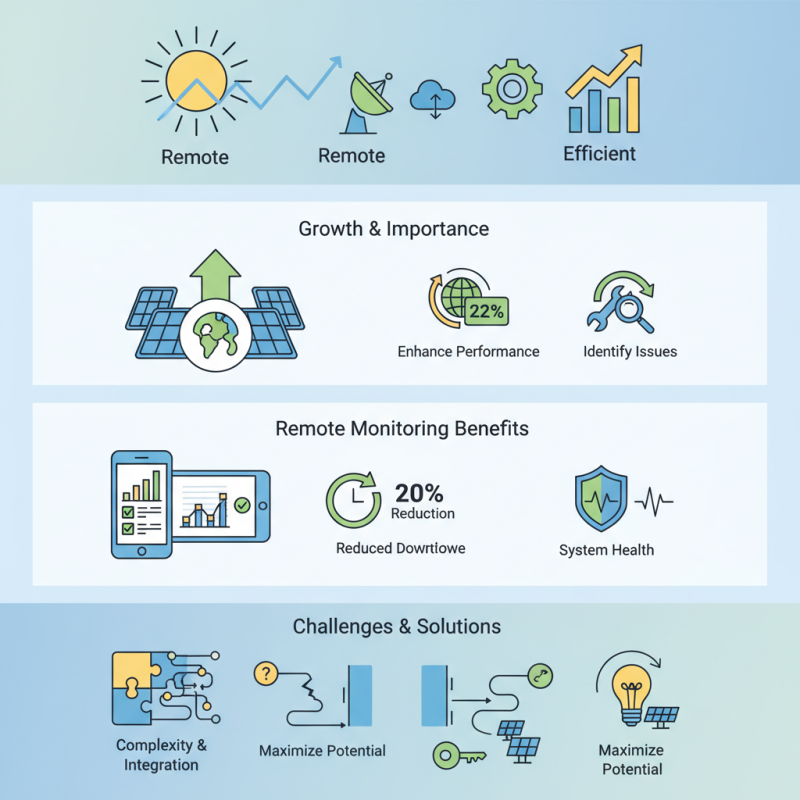
In recent years, solar energy has grown significantly. A report by the International Renewable Energy Agency highlights a 22% increase in global solar capacity in 2021 alone. This momentum underscores the importance of monitoring solar energy production remotely. Efficient monitoring can enhance performance, identify issues, and optimize energy output.

Understanding how to monitor solar energy production remotely is vital for both residential and commercial systems. Remote monitoring enables users to track performance metrics and detect anomalies. According to a 2022 study, systems equipped with remote monitoring reduced downtime by 20%. This data is crucial for maintaining the health of solar installations.

However, many still struggle with implementation. The technology can seem complex. There are various tools available, but choosing the right one is not always straightforward. The industry faces challenges in standardizing data formats and integrating multiple devices. Despite these hurdles, the benefits of effective monitoring are clear. As we delve deeper into this topic, finding solutions will be key to maximizing solar energy potential.
How to Monitor Solar Energy Production Remotely and Efficiently?

Understanding the Importance of Remote Monitoring in Solar Energy Systems

Remote monitoring of solar energy systems has become increasingly important. According to a recent report by the International Renewable Energy Agency, about 80% of solar energy installations now employ some form of remote monitoring. This allows for real-time data collection and analysis, enhancing system efficiency. The ability to monitor performance remotely can alert operators to issues before they escalate.

Regular checks are crucial. Inadequate monitoring can lead to inefficiencies. The U.S. Department of Energy points out that unmonitored systems can lose up to 30% of their potential energy output. Field data shows that systems without monitoring can experience undetected malfunctions for weeks or even months. This loss can significantly impact return on investment.

Effective remote monitoring requires reliable technology. An integrated approach helps track solar output, environmental factors, and equipment health. However, it's easy to overlook system updates. Outdated software can compromise data accuracy and accessibility. Continuous improvement is essential for optimal performance. Keeping up with advancements ensures that monitoring systems remain effective and reliable.

Key Technologies for Efficient Solar Energy Production Monitoring

Monitoring solar energy production is crucial for optimizing efficiency. Key technologies enable real-time tracking of solar output. Remote monitoring systems utilize IoT devices. These devices collect data on energy production, weather conditions, and system performance. By analyzing this data, users can identify trends and make adjustments to maximize energy capture.

Tips for effective monitoring include using mobile applications that offer user-friendly dashboards. These tools allow you to view performance metrics anytime. Integrate weather forecasting systems with your monitoring setup. Accurate forecasts can help you anticipate fluctuations in solar production due to cloud cover or storms.

Regularly reviewing collected data is essential. Data analysis reveals inefficiencies or maintenance needs. Some users may find a learning curve in interpreting complex data sets. Consider seeking professional guidance if necessary. Embrace continuous improvement practices to enhance the effectiveness of your monitoring strategy.

Monthly Solar Energy Production (kWh)

Methods for Real-Time Data Collection and Analysis in Solar Energy

Monitoring solar energy production is essential for efficiency. Real-time data collection helps in tracking performance and optimizing energy output. One effective method involves using IoT devices equipped with sensors. These sensors monitor various parameters like temperature, radiation, and system performance. The data collected is transmitted to a central server for analysis.

Data analysis can reveal performance trends and potential issues. However, relying solely on automated systems can lead to oversight. Human intervention is critical. Regular inspections complement data analytics. This hybrid approach ensures accuracy in operations. Predictive maintenance can be enhanced by understanding data patterns.

Integrating cloud computing enables remote access to this data. Users can monitor their systems from anywhere. This flexibility is crucial for timely decision-making. Nevertheless, security remains a concern. Protecting sensitive data should be a priority. Thus, while technology enhances monitoring, it requires ongoing evaluation and adjustment.

Best Practices for Remote Monitoring of Solar Energy Systems

Remote monitoring of solar energy systems is crucial for optimizing performance. According to a report by the International Renewable Energy Agency (IRENA), effective monitoring can enhance solar system efficiency by up to 30%. This emphasizes the importance of real-time data and analytics in managing energy production.

To ensure efficient remote monitoring, consider utilizing smart sensors to collect data. These sensors help track energy output, weather conditions, and system health. Regular data analysis allows for early detection of issues and ensures quick repairs. A study from the National Renewable Energy Laboratory (NREL) indicates that maintenance alerts can reduce downtime by 40%.

Tip: Set up alerts for performance dips. This helps catch problems early.

Transparency in data reporting is another best practice. Sharing performance metrics with stakeholders builds trust. It also provides a clear view of system effectiveness. However, remember that data accuracy is vital. Incorrect assessments can lead to misinformed decisions.

Tip: Regularly cross-check data sources. This minimizes errors and maximizes reliability.

Utilizing these best practices can lead to better decision-making and improved financial returns from solar investments. Being proactive enhances not just individual systems but contributes to larger energy goals.

How to Monitor Solar Energy Production Remotely and Efficiently? - Best Practices for Remote Monitoring of Solar Energy Systems

Monitoring Aspect Description Tools/Technologies
Real-Time Monitoring Continuously tracking solar energy production metrics. IoT sensors, wireless monitoring systems
Data Visualization Representing data in user-friendly charts and graphs. Dashboard software, cloud services
Alerts and Notifications Automatic alerts for performance anomalies or failures. Mobile apps, email notifications
Historical Data Analysis Analyzing past performance for optimization. Data analytics tools, big data platforms
Remote Troubleshooting Identifying and resolving issues without onsite visits. Remote access software, diagnostic tools
Performance Reporting Regular reports on system performance metrics. Reporting tools, business intelligence software

Integrating User-Friendly Interfaces for Effective Monitoring Solutions

Effective monitoring of solar energy production is essential for maximizing efficiency. User-friendly interfaces play a crucial role in this process. A well-designed interface allows users to easily track energy generation through simple graphs and real-time data. Visual representations should be clear and engaging, making it easier for users to understand their solar systems at a glance.

Integrating intuitive features is also important. Notifications about system performance or maintenance needs can enhance user experience. Users often appreciate the option to receive alerts directly on their smartphones. Yet, some systems lack customization, which can lead to frustration. The ability to customize dashboards or notifications should be considered a priority for developers.

Moreover, users often face challenges with complex data analysis. While detailed statistics are valuable, overwhelming users with information can detract from their experience. Finding the right balance is vital. A successful interface should simplify data without losing essential details. Continuous feedback from users can guide improvements, ensuring the interface evolves to meet their needs. This iterative process reflects a commitment to efficacy and user satisfaction in solar energy monitoring.

FAQS

: Why is remote monitoring important for solar energy systems?

: It enhances system efficiency by enabling real-time data collection and alerts about potential issues.

What are the consequences of inadequate monitoring?

Unmonitored systems can lose up to 30% of energy output and experience undetected malfunctions for weeks.

What technology is essential for effective remote monitoring?

Reliable technology, including smart sensors and integrated systems, is vital for tracking output and equipment health.

How can data accuracy impact solar energy monitoring?

Inaccurate data can lead to poor decisions, affecting system performance and financial returns.

What can users do to ensure proactive monitoring?

Setting up alerts for performance dips helps catch issues early, reducing downtime.

How can user-friendly interfaces improve monitoring?

A simple, engaging interface allows easy tracking of energy generation and better user understanding.

What role does transparency play in data reporting?

Sharing metrics builds trust and provides stakeholders with clear visibility, ensuring informed decisions.

How can customization affect user experience?

Lack of customization can lead to frustration; users prefer personalized dashboards and notifications for better engagement.

Why is continuous improvement important in monitoring systems?

Keeping software updated ensures data accuracy and system reliability, enhancing overall performance.

What challenges do users face with complex data analysis?

Overwhelming data can hinder user experience; simplifying information while keeping essential details is key.

Conclusion

Effective remote monitoring of solar energy production is crucial for optimizing performance and ensuring system reliability. This article explores how to monitor solar energy production remotely by highlighting the importance of continuous oversight in solar energy systems. It delves into key technologies that facilitate efficient monitoring, including advanced sensors and data analytics tools.

Furthermore, the article discusses methods for real-time data collection and analysis, emphasizing best practices for effective system monitoring. It also underscores the significance of user-friendly interfaces that enhance accessibility and usability for stakeholders. By understanding these elements, operators can significantly improve the management and efficiency of solar energy production, ultimately contributing to more sustainable energy practices.

Mason

Mason

Mason is a seasoned marketing professional with a deep expertise in the company's offerings and a passion for driving brand awareness. With a strong background in digital marketing strategies, he has an innate ability to connect with diverse audiences and effectively communicate product benefits.......