Solar street lights look simple from the roadside. A panel collects sunlight, a battery stores energy, and an LED produces light. Yet dependable nighttime lighting depends on how these parts work together under changing conditions.
So, what factors affect solar street light performance? The answer begins with solar irradiance, panel orientation, battery capacity, LED efficiency, controller quality, installation height, and maintenance. Local weather matters too. A shaded panel beside a tall building may collect far less energy than its specification suggests. Dust can form a thin grey film on the panel. It is easy to overlook.
Dr. Peter Gevorkian, a recognized solar-energy systems expert, stated, “A photovoltaic system must be designed as a complete system, not as a collection of separate components.” This principle applies directly to solar street lighting. A high-output panel cannot compensate for an undersized battery. A powerful LED cannot perform reliably with poor energy management. Even a good product may fail when installed in the wrong location.
This guide examines seven practical factors affecting solar street light performance. It considers real operating details, including cloudy nights, winter charging, battery aging, glare control, and irregular cleaning schedules. The analysis is useful, but it is not perfect. Site conditions differ widely. A design that works beside a dry highway may struggle in a humid coastal town. Good performance comes from matching specifications with the actual environment, not trusting one impressive number.
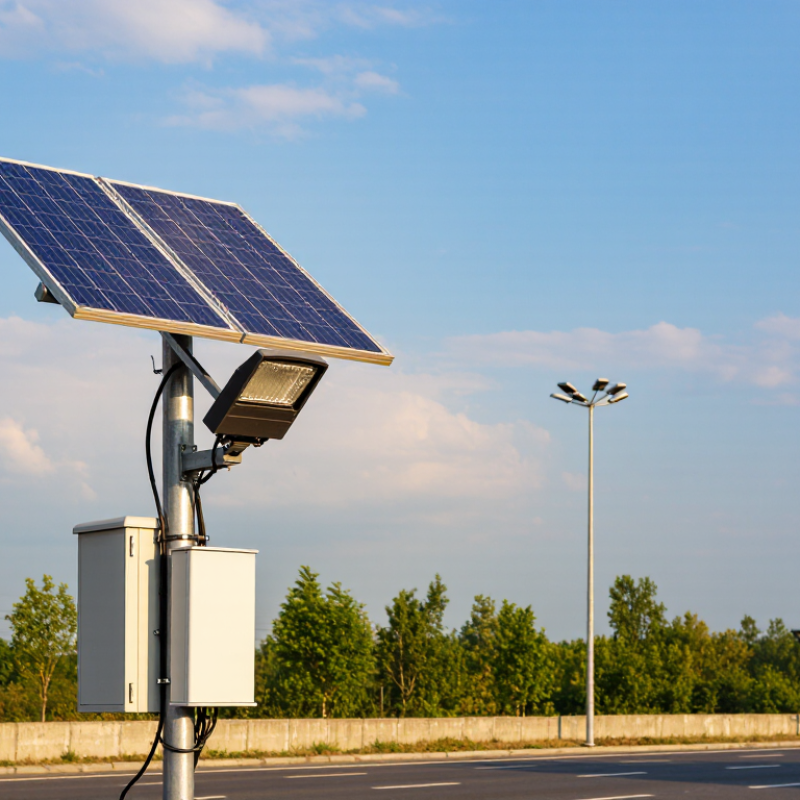
Solar Energy Availability and Weather Conditions
Solar street light performance begins with the sunlight reaching the panel, not the lamp’s rated wattage. The World Bank’s Global Solar Atlas shows annual photovoltaic output can vary from below 800 to above 2,000 kWh per installed kWp, depending on location. A bright annual average can mislead. A site may receive strong summer sunlight but experience long winter nights and weak charging.
Cloud cover reduces solar irradiance quickly. Rain also leaves dust, salt, or pollen on the panel surface. The International Energy Agency Photovoltaic Power Systems Programme reports that soiling losses vary widely by climate and maintenance conditions. In dry regions, several weeks without cleaning can matter. Snow is more complicated. It blocks light, but reflective snow can improve output after clearing. Short-term weather often matters more than yearly averages.
Battery recovery becomes difficult during consecutive cloudy days. Designers should check monthly solar data, not only annual figures. The World Meteorological Organization reports that extreme weather patterns are becoming more disruptive, making old assumptions less dependable. Temperature matters too. Excessive heat can reduce panel efficiency and accelerate battery aging, while cold weather can limit battery capacity. Three nights of autonomy may sound safe. It may not survive a stormy week. A local shading survey and seasonal test are still necessary, even when software predicts excellent performance.
| No. | Performance Factor | Relevant Data or Range | Effect on Solar Street Light Performance | Recommended Design Response |
|---|---|---|---|---|
| 1 | Solar Irradiance | Photovoltaic modules are rated at 1,000 W/m² under standard test conditions. Actual irradiance varies significantly by location, time, and season. | Lower irradiance produces less daytime energy, reducing nighttime operating hours and increasing the risk of dimming or shutdown before dawn. | Use location-specific solar data, correctly orient the panel, and size the panel and battery for the lowest expected solar season. |
| 2 | Peak Sun Hours | Peak sun hours represent the daily solar energy equivalent of 1,000 W/m². A site may receive approximately 2–6 peak sun hours per day depending on latitude, season, and climate. | A system designed for high annual averages may underperform during winter or prolonged cloudy periods. | Base the energy budget on monthly or seasonal values rather than only the annual average, and include adequate battery autonomy. |
| 3 | Cloud Cover and Rainfall | Thick clouds can reduce sunlight reaching a PV module to a small fraction of clear-sky levels. Rainy periods may last for several consecutive days. | Repeated low-energy charging can leave the battery partially charged, shortening illumination time and increasing deep-discharge cycles. | Allow for multiple low-sun days, use an energy-saving dimming schedule, and select a battery capacity suitable for the local rainy season. |
| 4 | Ambient Temperature | Crystalline-silicon PV power commonly decreases by about 0.3–0.5% for each 1°C increase in cell temperature above the rated reference temperature. | Hot conditions can reduce daytime charging efficiency, while cold conditions may reduce available battery capacity depending on battery chemistry. | Provide airflow behind the panel, avoid heat-trapping installation, and choose batteries and charge settings for the local temperature range. |
| 5 | Dust, Sand, and Snow | A layer of dust, sand, leaves, or snow blocks sunlight and can cause partial shading. The loss varies with coverage, surface angle, and cleaning frequency. | Reduced light transmission lowers charging energy; uneven deposits can create mismatch losses and localized heating. | Use an appropriate tilt angle, maintain clear access for cleaning, inspect after dust storms, and avoid nearby sources of persistent soiling. |
| 6 | Shading and Panel Orientation | Trees, buildings, utility poles, and incorrect azimuth or tilt can reduce direct solar exposure. Shadows are especially important during the morning and afternoon. | Even partial shading may substantially reduce the energy harvested during affected periods and can prevent the battery from reaching a full charge. | Perform a solar-path assessment, keep the panel unobstructed throughout the year, and orient and tilt it according to the site latitude and local solar conditions. |
| 7 | Wind, Humidity, and Extreme Weather | High wind, moisture, salt air, hail, and lightning can affect the pole, panel, enclosure, wiring, and electronic controls. Coastal environments are especially corrosive. | Mechanical damage, water ingress, corrosion, or electrical faults can reduce output, create safety risks, and increase maintenance requirements. | Use corrosion-resistant hardware, sealed outdoor-rated enclosures, suitable wind-load calculations, proper grounding, and routine inspections after severe weather. |
Note: Actual performance depends on the site’s solar resource, system sizing, battery condition, lighting schedule, installation quality, and maintenance practices.
Performance depends on sunlight reaching the panel, not lamp wattage alone. Annual averages can mislead. Check monthly sunlight, especially during winter.
Yes. Consecutive cloudy days can prevent full battery recovery. Three backup nights may fail during a stormy week. Weather wins sometimes.
Rain can leave dust, salt, or pollen on the surface. Dry climates may need cleaning every few weeks. Snow blocks light, but reflected light can help after clearing.
Northern sites generally need true-south orientation. Southern sites usually need true-north orientation. A tilt near local latitude is a practical starting point.
Yes. Shade from trees, buildings, or rooflines can sharply reduce daily charging. Check the site at 9 a.m., noon, and 3 p.m. Seasonal checks matter.
High temperatures can reduce panel efficiency and age batteries faster. Cold weather can reduce battery capacity. Heat leaves a quiet bill later.
Use firm foundations, sealed cable joints, and adequate drainage. Keep ventilation behind the panel. Incorrect pole direction can waste energy every day.
Controllers should regulate charging, dimming, and battery protection accurately. Review traffic patterns before setting dimming times. Oversized loads can drain batteries before dawn.
Inspect dusty panels monthly and clean them with soft water. Use a non-abrasive cloth. Check battery voltage, alarms, terminals, and brightness quarterly.
Keep measured battery data and maintenance records. Without records, aging storage may look like a controller fault. That mistake is common.
Solar street light performance depends on several connected factors, and understanding what factors affect solar street light performance is essential for reliable, efficient operation. Solar energy availability and weather conditions determine how much sunlight the system can collect each day. Shading, cloudy periods, seasonal changes, dust, and extreme temperatures may reduce charging efficiency. Solar panel efficiency, orientation, and tilt also influence energy collection, so panels should be positioned to receive maximum direct sunlight throughout the year.
Battery capacity, charging behavior, and energy storage determine whether the light can operate through the night or during extended periods of poor weather. LED lighting quality and illumination requirements must be balanced to provide sufficient brightness without excessive energy consumption. Finally, the controller must manage charging, discharging, lighting schedules, and protection functions accurately. Proper installation, regular cleaning, inspections, and timely maintenance help preserve system performance, extend component life, and ensure consistent nighttime illumination.

 GeoSyn Solar