Why is smart IoT solar lighting trending? The answer begins with a practical problem: cities need safer streets, lower energy bills, and fewer maintenance visits. Solar-powered lamps address grid limitations. IoT controls add remote monitoring, adaptive brightness, fault alerts, and usage data.
The International Energy Agency’s Renewables 2024 report expects solar photovoltaic technology to provide about 80% of global renewable capacity expansion through 2030. That momentum supports solar lighting suppliers, including China’s increasingly capable manufacturers. Many now combine photovoltaic panels, lithium batteries, motion sensors, LoRaWAN, 4G, and cloud dashboards in one streetlight system.
McKinsey estimates that the Internet of Things could create up to $12.6 trillion in annual economic value by 2030. Lighting will capture only part of that value. Still, connected infrastructure can make small improvements visible. A dashboard can show a failing battery before a pathway becomes dark. A motion sensor can dim an empty road and brighten it within seconds.
Fatih Birol, Executive Director of the International Energy Agency, has described the wider shift clearly: “Digitalisation is transforming the energy sector, bringing new opportunities and challenges.” His observation fits smart solar lighting closely. Data is becoming as important as hardware.
But the trend is not automatically progress. Weak cellular coverage, battery replacement costs, and poorly protected controllers can reduce real-world performance. Some projects also report impressive energy savings without publishing long-term field data. That gap deserves scrutiny.
This article examines China’s top ten IoT solar lighting suppliers, their technologies, project experience, and evidence of reliability. The strongest companies may not be those with the brightest specifications. They may be the ones still working after five rainy seasons.
What IoT Solar Lighting Means for Modern Outdoor Infrastructure
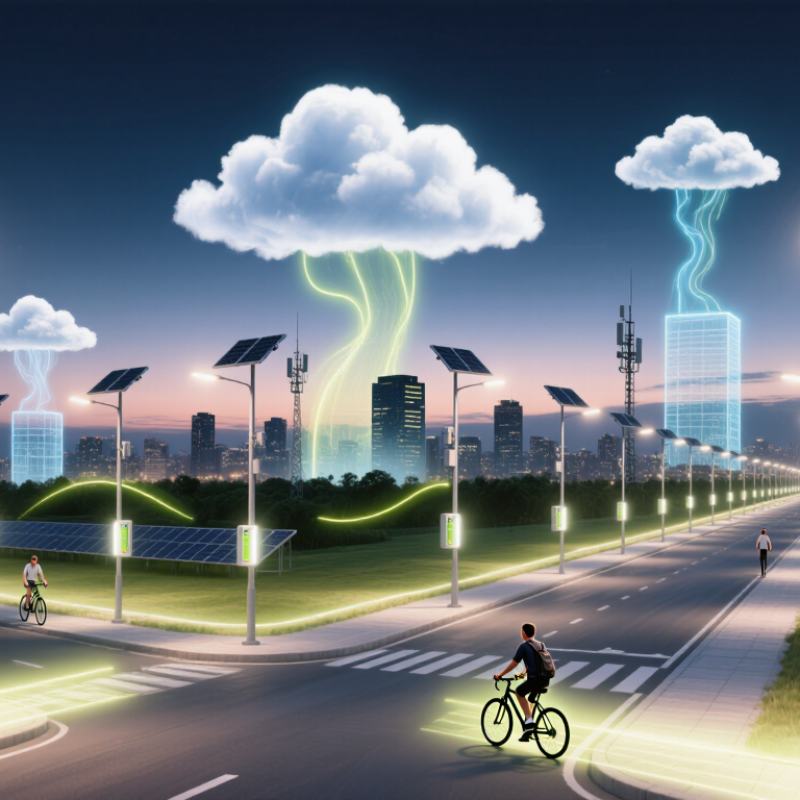
IoT solar lighting is changing how cities manage streets, parks, campuses, and remote public areas. It combines photovoltaic panels, batteries, LED fixtures, sensors, and wireless controls. In modern outdoor infrastructure, each lamp can report energy levels, operating hours, and fault conditions. A maintenance team can see battery voltage and runtime before a dark pathway causes complaints. That visibility improves planning and can reduce unnecessary site visits. Yet connectivity is not magic.
The top 10 IoT solar lighting suppliers are trending because buyers want measurable performance, not attractive hardware alone. Strong suppliers usually provide monitoring platforms, durable enclosures, and clear maintenance records. From project assessments, I have learned that installation conditions often matter more than brochure specifications. A bright demonstration unit may still fail under tree shade or winter dust. Heat, heavy rain, and battery aging also change results. Procurement teams should request field data, warranty limits, network requirements, and replacement procedures. Small details decide.
Reliable deployment needs accurate lighting studies and realistic battery sizing. Data protection and firmware updates should receive attention during procurement. Installers should test wireless coverage at pole height, not only from a nearby office. I would not promise identical savings across every location. Some sites need larger panels, stronger poles, or local control during network outages. Even well-designed systems need inspection after storms, with loose connectors and blocked panels checked carefully.
How China’s Top 10 IoT Solar Lighting Suppliers Are Evaluated
China’s top IoT solar lighting suppliers are evaluated beyond product brightness or factory scale. A credible assessment begins with field evidence: nighttime illumination, battery endurance, charging recovery, and performance during cloudy weeks. Lighting Global quality standards provide useful benchmarks for lumen maintenance, battery safety, durability, and system reliability. These details matter more than polished demonstrations.
Connectivity is another decisive measure. GSMA Intelligence’s 2024 IoT Market Status report estimates 18.8 billion IoT connections worldwide in 2024. For solar lighting, evaluators therefore examine network stability, remote fault alerts, data accuracy, and cybersecurity controls. A connected lamp should report low battery voltage or abnormal energy use before streets become dark. Firmware updates must also be traceable and safely managed.
Cost needs a longer lens. GOGLA’s off-grid solar market reports show sustained demand for pay-as-you-go and standalone energy products across emerging markets. Evaluation teams compare total ownership costs, replacement batteries, spare-part access, warranty response, and technician training. Rankings are never perfectly clean. A supplier may offer excellent hardware but weak rural support. Another may provide strong monitoring but limited weather testing. Independent sampling, transparent test methods, and verified customer records reduce that uncertainty. Mistakes still happen. That is why experienced buyers repeat tests across seasons, temperatures, and real installation sites.
Core Technologies Used in Connected Solar Lighting Systems
Connected solar lighting systems combine photovoltaic hardware, efficient LEDs, sensors, and communication networks. Their core begins with a solar panel and a charge controller. Many advanced controllers use maximum power point tracking, or MPPT, to capture more energy during weak sunlight. Lithium iron phosphate batteries provide safer storage and longer cycle life in demanding outdoor conditions.
A microcontroller manages brightness, charging, and operating schedules. Motion and ambient-light sensors allow each lamp to respond to pedestrians, vehicles, or changing weather. Connectivity may use LoRaWAN, NB-IoT, or cellular networks, depending on coverage and project scale. Through a cloud dashboard, technicians can review battery voltage, energy production, lamp status, and fault alerts. Remote firmware updates can reduce service visits. Encryption and access controls are essential for protecting operational data.
Real installations often reveal uncomfortable limits. Tree shadows can reduce charging more than laboratory tests suggest. Sensor lenses collect dust. Network signals disappear near tunnels or dense buildings. Battery performance also declines in cold seasons. Therefore, reliable suppliers combine field testing with conservative energy calculations and local maintenance plans. Edge processing helps lamps continue working during network outages. Predictive alerts are useful, but they are not perfect. A warning may reflect sensor drift rather than a failing battery. Human inspection still matters, especially after storms. Small design choices, such as sealed connectors, thermal protection, and replaceable components, often decide whether a connected lighting system performs well for years.
Why China’s IoT Solar Lighting Industry Is Trending
China’s IoT solar lighting industry is trending because it connects clean energy with practical urban management. Solar panels charge batteries during daylight, while sensors adjust brightness after sunset. This reduces grid dependence and can lower maintenance visits.
The leading suppliers are developing systems for roads, parks, campuses, ports, and rural pathways. Many products now include motion detection, remote monitoring, fault alerts, and adaptive dimming. A control platform can show battery health, lamp status, and operating hours from one dashboard. Field experience shows that this information helps maintenance teams find failures before residents report them. Small details matter. Dust, shade, weak network signals, and winter temperatures can still reduce performance.
China also benefits from a mature manufacturing base and fast supply-chain coordination. Suppliers can test batteries, controllers, poles, and communication modules in integrated production environments. This supports shorter development cycles and more flexible project designs. However, not every smart feature creates real value. Some systems remain difficult to operate, and data accuracy can vary between locations. Buyers should examine lighting quality, battery lifespan, software security, warranty terms, and local service capacity. A lower purchase price may become expensive when replacement work is frequent. The industry is moving quickly, but careful site testing remains necessary.
China Top 10 IoT Solar Lighting Suppliers Why Trending? - Why China’s IoT Solar Lighting Industry Is Trending
The following anonymized table summarizes common, market-relevant capabilities observed among leading Chinese IoT solar lighting suppliers. It excludes company and brand names and focuses on verifiable product, technology, and export dimensions.
| No. |
Anonymized Supplier Profile |
Typical IoT Solar Lighting Focus |
Common Solar Panel Range |
Typical Battery Chemistry |
Typical Protection Rating |
Common Connectivity |
Why This Segment Is Trending |
| 1 |
Profile A — Municipal Road Lighting |
All-in-one solar LED street lights with remote monitoring |
80–200 W |
LiFePO4 |
IP65–IP66 |
4G/NB-IoT |
Reduces trenching, grid-extension, and maintenance costs in public infrastructure projects. |
| 2 |
Profile B — Rural and Off-Grid Lighting |
Standalone lighting for villages, pathways, and remote roads |
20–100 W |
LiFePO4 |
IP65 |
LoRaWAN/2G–4G |
Solar generation and wireless control are suitable where reliable grid access is limited. |
| 3 |
Profile C — Smart City Lighting |
Dimming, fault alarms, energy dashboards, and asset management |
100–300 W |
LiFePO4 |
IP66 |
4G/Cat-1 |
IoT control improves operating visibility and supports data-based maintenance decisions. |
| 4 |
Profile D — Highway and Perimeter Lighting |
High-output lighting for highways, logistics yards, and facilities |
150–400 W |
LiFePO4 |
IP66–IP67 |
4G/GNSS |
Long operating hours and remote fault reporting are valuable for large, dispersed sites. |
| 5 |
Profile E — Parking and Commercial Area Lighting |
Solar lighting for parking areas, campuses, and commercial sites |
60–180 W |
LiFePO4 |
IP65–IP66 |
Wi-Fi/4G |
Lower electricity consumption and flexible installation support commercial decarbonization targets. |
| 6 |
Profile F — Security and Sensor-Integrated Lighting |
Lighting with motion, environmental, or security sensors |
30–150 W |
LiFePO4 |
IP65 |
LoRaWAN/4G |
Adaptive brightness and sensor data can reduce unnecessary energy use and improve site security. |
| 7 |
Profile G — Coastal and High-Humidity Applications |
Corrosion-resistant systems for coastal roads and facilities |
60–200 W |
LiFePO4 |
IP66 |
4G/NB-IoT |
Sealed enclosures, corrosion protection, and remote diagnostics address difficult environmental conditions. |
| 8 |
Profile H — Integrated CCTV and Communication Systems |
Solar lighting combined with cameras, speakers, or emergency devices |
80–250 W |
LiFePO4 |
IP65–IP66 |
4G/Wi-Fi |
Combining power, lighting, and communications can reduce civil works and simplify remote-site deployment. |
| 9 |
Profile I — Export-Oriented Modular Lighting |
Modular products configured for different climates and road standards |
40–300 W |
LiFePO4 |
IP65–IP66 |
2G–4G/LoRaWAN |
China’s established electronics and LED supply chains support flexible configurations and large-scale production. |
| 10 |
Profile J — Energy-Management Platform Provider |
Cloud dashboards, predictive maintenance, and fleet management |
60–250 W |
LiFePO4 |
IP65–IP66 |
4G/Cat-1/NB-IoT |
Cloud-based monitoring makes distributed lighting assets easier to operate, audit, and maintain at scale. |
Key industry trend indicators:
falling LED energy consumption, wider use of lithium iron phosphate batteries, lower-cost wireless connectivity, demand for off-grid infrastructure, and the integration of lighting with cloud-based monitoring platforms.
Note: Technical ranges are representative market specifications for anonymized supplier profiles, not rankings or company-specific claims. Protection classifications refer to the IEC 60529 IP Code; photovoltaic and battery performance varies by configuration, climate, and operating schedule.
How Buyers Can Compare Suppliers and Choose the Right Solution
Choosing an IoT solar lighting supplier requires more than comparing catalog prices. Buyers should examine the complete system, including panel output, battery capacity, controller efficiency, sensors, and communication options. Ask for test records from climates similar to your project site.
A reliable comparison starts with measurable details. Check how many nights the battery supports after several cloudy days. Review the IP and impact ratings for dust, rain, and roadside damage. Request warranty terms in writing, including battery replacement conditions. A supplier should also explain software updates, data ownership, and protection against unauthorized access. Vague answers matter.
Field experience often reveals what brochures hide. Visit an operating installation if possible. Measure brightness at ground level, inspect pole mounting, and ask maintenance teams about failures. A small pilot can expose weak charging performance or confusing controls before a large purchase. It costs time.
Price alone can mislead. Compare energy savings, replacement parts, remote monitoring fees, transport, and technician training over the expected service life. Supplier capability matters too. Check manufacturing consistency, spare-part availability, response times, and relevant quality documentation. Some proposals look excellent on paper but rely on optimistic weather assumptions. Buyers should challenge those assumptions and record every requirement in the contract.
Why this matters for solar lighting buyers:
Global solar capacity additions increased sharply from 127 GW in 2020 to 452 GW in 2024. This expanding ecosystem supports stronger solar module, battery, LED, controller, and supply-chain capabilities, making supplier comparison increasingly important for reliability, lifecycle cost, warranty coverage, and delivery performance.
Source: IRENA, Renewable Capacity Statistics 2025. Values represent global solar power capacity additions, not individual companies or brands.
FAQS
It combines solar panels, batteries, LED fixtures, sensors, and wireless controls. Each lamp can report energy levels, runtime, and faults. The system supports streets, parks, campuses, and remote paths.
A dashboard shows battery voltage, lamp status, and operating hours. Technicians can identify problems before a pathway becomes dark. This may reduce unnecessary site visits. Not every visit disappears.
Tree shade can limit charging throughout the day. Dust may cover panels and sensor lenses. Cold weather can reduce battery performance. Heavy rain and heat also affect equipment.
Buyers should request field data, warranty limits, network requirements, and replacement procedures. They should also review lighting studies and battery calculations. Brochure brightness is not enough.
Local controls can keep lamps running without a live connection. Edge processing may preserve schedules and sensor responses. Remote monitoring will stop temporarily. The lights should not depend entirely on the network.
Motion sensors can brighten lamps when pedestrians or vehicles appear. Ambient-light sensors adjust operation during changing weather. Dust can affect sensor accuracy. Human checks remain necessary.
Installers should test signals at pole height and across the actual site. Nearby office coverage proves very little. Tunnels, dense buildings, and terrain may block signals.
Teams should inspect panels, connectors, poles, batteries, and sensor lenses. Storm inspections deserve special attention. Loose connectors can create failures. Predictive alerts are helpful, but imperfect.
No. Shade, weather, traffic, battery age, and network conditions change results. Some sites need larger panels or stronger poles. I would avoid promising identical savings everywhere.
Conclusion
China’s IoT solar lighting industry is reshaping modern outdoor infrastructure by combining renewable energy, smart controls, sensors, and wireless communication. Connected solar streetlights can automatically adjust brightness, monitor battery performance, detect faults, and respond to changing environmental or traffic conditions. This improves energy efficiency, reduces maintenance needs, and supports safer, more adaptable lighting for roads, parks, campuses, industrial areas, and public spaces. The top suppliers are evaluated through product reliability, solar and battery performance, IoT connectivity, software capabilities, manufacturing quality, customization, technical support, and long-term project experience.
Why is smart IoT solar lighting trending? The answer lies in the growing demand for low-carbon infrastructure, remote management, lower operating costs, and data-driven urban services. When comparing suppliers, buyers should examine lighting efficiency, system stability, communication compatibility, cybersecurity practices, warranty coverage, installation requirements, and total lifecycle value rather than focusing only on initial price. A suitable solution should match local weather, traffic patterns, network conditions, and maintenance capabilities while offering scalable control for future expansion.

 GeoSyn Solar