Hybrid solar systems are becoming increasingly popular among homeowners and businesses aiming for energy independence. These systems combine solar panels with battery storage and often a grid connection. What are hybrid solar systems and how do they work? Understanding this is crucial for anyone considering a sustainable energy investment.
A hybrid solar system captures sunlight through solar panels. The energy generated can power your home directly. Any excess energy is stored in batteries for later use. This allows users to rely on solar power even during outages. It also reduces dependence on the grid. These systems can be complex and require careful planning.
Many people jump into solar without fully understanding their needs. It’s essential to assess your energy consumption first. Picking the right components is also critical. Not all hybrid systems are created equal. Some may not provide adequate backup during emergencies. Therefore, research and consulting with experts is vital. This ensures a reliable setup that meets your expectations.
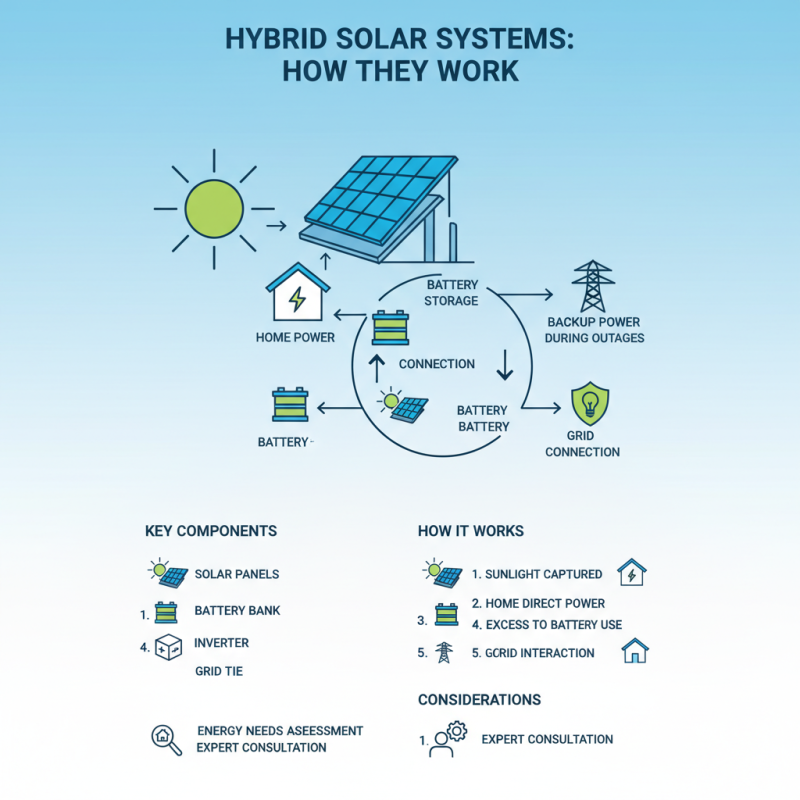
Hybrid solar systems are becoming increasingly popular due to their flexibility and efficiency. These systems combine solar panels with other energy sources, typically the grid or batteries. This allows users to harness solar energy during the day and rely on stored energy or the grid at night. According to a report from the Solar Energy Industries Association (SEIA), installations of hybrid systems have increased by over 30% in the last year alone.
Understanding how these systems function is crucial. A hybrid solar system uses advanced technology to switch between energy sources seamlessly. This ensures a consistent energy supply, reducing reliance on fossil fuels. Data from the International Energy Agency (IEA) shows that hybrid systems can reduce a household's electricity bills by up to 70%, depending on usage. However, potential buyers should consider the initial installation costs and maintenance needs, as these systems may require more upfront investment than traditional solar setups.
Hybrid systems also present challenges. Users must understand their specific energy needs to optimize performance. A clear understanding of battery capacity and solar panel efficiency is essential. Some users may experience fluctuations in energy availability if not properly managed. Continuous advancements in technology may address these issues, but awareness remains vital. Balancing optimal use with cost efficiency is necessary for effective solar energy management.
Hybrid solar systems integrate traditional energy sources with solar technology. They bring together solar panels and battery storage. This combination offers flexibility and resilience. The key components play distinct roles that contribute to the system's efficiency.
Solar panels capture sunlight and convert it into electricity. This is the heart of any solar setup. The electricity flows to an inverter, which transforms it from direct current (DC) to alternating current (AC). This AC power can then be used to run household appliances. The inverter has to work efficiently; otherwise, energy losses can occur.
Battery storage is another critical component. It stores excess energy generated during sunny days. This keeps energy available during cloudy days or at night. However, battery performance can decline over time. Choosing the correct battery type is essential for long-term reliability. Additionally, monitoring systems track energy production and usage. These systems provide valuable insights for optimizing energy consumption. Adjustments based on this data can lead to more efficiency.
| System Type | Key Components | Function | Energy Storage | Efficiency (%) | Warranty (Years) |
|---|---|---|---|---|---|
| Home Hybrid System | Solar Panels, Inverter, Battery | Convert sunlight to electricity | Li-ion, 10kWh | 90% | 25 |
| Commercial Hybrid System | Solar Panels, Central Inverter, Battery | High efficiency for businesses | Li-ion, 50kWh | 87% | 20 |
| Off-grid Hybrid System | Solar Panels, Inverter, Battery Bank | Independent energy supply | Lead-acid, 15kWh | 80% | 15 |
| Grid-tied Hybrid System | Solar Panels, Inverter | Ties to main grid for balance | None | 92% | 25 |
| Portable Hybrid System | Foldable Panels, Inverter, Battery | For off-site activities | Li-ion, 1kWh | 85% | 5 |
| Community Hybrid System | Multiple Solar Arrays, Central Inverter | Shared power for locality | Li-ion, 100kWh | 88% | 20 |
| Residential Battery System | Solar Panels, Battery Storage | Home energy resilience | Li-ion, 12kWh | 89% | 10 |
| Smart Hybrid System | Solar Panels, Smart Controller, Battery | Optimizes energy use | Li-ion, 14kWh | 91% | 15 |
| Luxury Hybrid System | High-end Solar Panels, Inverter, Battery | High performance and aesthetics | Li-ion, 20kWh | 93% | 25 |
| Industrial Hybrid System | Large Panels, Heavy-duty Inverter | Power for factories | Lead-acid, 200kWh | 85% | 20 |
Hybrid solar systems combine traditional energy sources with solar technology. They allow users to harness the sun's power while maintaining the reliability of grid electricity. This flexibility helps maximize energy use, especially during cloudy days or at night. Many systems have battery storage, which captures excess solar energy for later use.
When choosing a hybrid solar system, consider the efficiency of solar panels. High-quality panels convert sunlight into electricity effectively, which lowers energy costs. Battery capacity is also crucial. Larger batteries store more energy, ensuring you have power during outages. Additionally, smart technology enhances system management, optimizing energy consumption based on real-time data.
On the downside, hybrid systems can have higher upfront costs. Installation may require professional expertise, which adds to expenses. Some users report complexity in system maintenance. They must monitor energy output regularly to ensure everything works efficiently. Balancing the benefits of renewable energy with these challenges requires thoughtful consideration and planning.
Choosing the right hybrid solar system involves several important factors. You need to consider your energy needs and the installation space available. Calculate your average monthly energy usage to determine the system size. This helps you gauge how much solar power you’ll generate and use.
Your geographical location also matters. If you live in a sunny area, a hybrid system could maximize your energy harvest. Examine local regulations and incentives as they can impact your decision. It’s essential to understand how batteries work in these systems. They store excess energy and can provide power during outages.
Installation costs can vary significantly. Always request quotes from multiple providers. Investigate their credentials and past projects to ensure reliability. Look for reviews and testimonials. The right system should align with your financial goals and energy requirements. Remember, it’s not just about immediate savings. Think long-term to make a wise investment in your energy future.
Hybrid solar systems blend photovoltaic panels with battery storage. They allow users to harness solar energy efficiently. However, the installation of these systems demands careful planning and professional expertise. A report from the Solar Energy Industries Association highlights that nearly 60% of new solar installations in the U.S. entail hybrid systems. This shift indicates growing reliability in their technology.
Proper installation calls for a site assessment. Factors like roof angle and sun exposure are vital. Experienced technicians can determine optimal system size. Often, homeowners miss these details, leading to subpar performance.
Maintenance is equally crucial. Regular inspections ensure batteries and panels function efficiently. A study from the National Renewable Energy Laboratory suggests that neglected maintenance can decrease energy output by up to 25%.
Safety also presents challenges. Electrical components require adherence to local codes. According to a 2022 report, improper installations can lead to failures or hazards. It's essential to hire certified installers.
Overall, while hybrid solar systems offer great benefits, attention to these installation and maintenance considerations is key to maximizing their potential.
: Hybrid solar systems combine traditional energy sources with solar technology. They include solar panels and battery storage.
Solar panels capture sunlight and convert it into electricity. This electricity is then sent to an inverter for use.
The inverter transforms direct current (DC) electricity into alternating current (AC) for household appliances.
Battery storage holds excess energy generated during sunny days, providing power during cloudy days or at night.
Choose a battery type based on performance and longevity. Battery efficiency can decline over time.
Monitoring systems track energy production and usage, providing insights to optimize energy consumption effectively.
Factors include roof angle and sun exposure. Proper site assessment is crucial for optimal performance.
Regular inspections are needed. Neglecting maintenance can decrease energy output significantly over time.
Professional installers ensure safety and compliance with local codes. Improper installations can cause hazards.
They may have higher upfront costs and complex maintenance. Users need to balance benefits with potential challenges.
Hybrid solar systems combine traditional energy sources with solar power, offering a flexible and efficient solution for energy needs. These systems harness solar energy while also maintaining access to the grid or backup generators, ensuring reliable power supply even during cloudy days or outages. Key components include solar panels, inverters, and battery storage, each playing a critical role in optimizing energy capture and consumption.
When considering hybrid solar systems, it's essential to understand their features and benefits, which include increased energy independence and reduced electricity bills. Choosing the right system involves evaluating your specific energy requirements and understanding installation and maintenance needs. Ultimately, understanding what are hybrid solar systems and how they work can empower consumers to make informed decisions for sustainable energy solutions.

GeoSyn Solar